
Get Started!
Looking for In-Home Care? See All Services
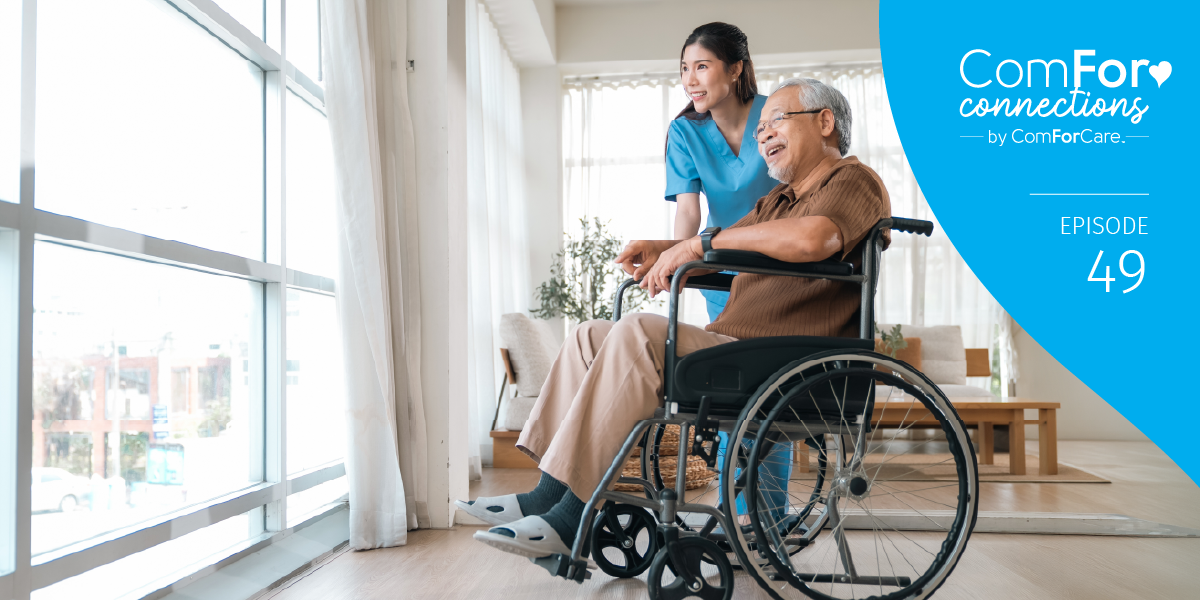
A rug that catches a toe, a pot pulled from a low cabinet, a bathroom that was never designed with aging in mind. When an older adult falls at home, it rarely happens because of one catastrophic failure.
Occupational therapist and certified aging in place specialist Esther Kane has spent her career assessing homes and helping families understand what actually creates risk and what they can do about it. In a recent episode of ComForConnections, she walked host Tiffany Robbinson through the practical side of making a home work for the long term: what to look for, where to start, and how to think about paying for it.
Fewer than 10% of homes in the United States are considered senior-friendly. That number is striking when you consider that more than 10,000 people turn 65 every day. Most homes were built without aging in mind: narrow doorways, slippery bathroom floors, storage arranged for convenience rather than safety.
Kane sees this regularly in her work. “I treated so many patients that came to rehab after a serious injury over something that was so silly,” she says. But these injuries are often the predictable outcomes of environments that haven’t kept pace with the people living in them.
The good news is that most of those risks can be addressed. The harder part is knowing where to look.
Kane recommends beginning with a professional home safety assessment conducted by an occupational therapist or a certified aging in place specialist with a CAPS or SHSS certification. The assessment produces something families rarely have: a prioritized list of what actually needs to change — and a starting point for building a network of providers who can execute on it.
Not everything needs to happen at once. “You can do it in bits and pieces,” Kane says, “but you can’t do it in bits and pieces unless you have the list of what to do.”
When Kane does assessments, the same problem areas come up repeatedly. The bathroom and kitchen carry the highest overall risk, but hazards show up throughout the home:
Rugs and floor coverings. Loose mats are among the most common tripping hazards, especially in bathrooms. For families who want to keep floor coverings, Kane recommends vinyl flat rugs — thin, grippy, and low enough that a walker or wheelchair won’t catch.
Bathroom risks. Getting in and out of the shower, toilet height, and inadequate lighting are the most frequent concerns. Grab bars are one of the most effective interventions, and design options have improved enough that many don’t read as medical equipment.
Kitchen storage. Items placed too high or too low force people to overreach or bend — both common causes of falls. If something you use daily requires a step stool or a deep squat to reach, it needs to move.
Clutter. Too much furniture, too many objects in the walking path, items buried behind other items in cabinets — Kane considers decluttering the first practical step of any aging in place process.
Smart home features such as voice-activated devices, automated thermostats, keypad locks, and alert systems can meaningfully extend independence at home. But Kane is firm on timing: the moment to introduce these tools is not when someone is already struggling with them.
Kane’s own late mother-in-law, who lived independently until age 99, ran into this issue when her old thermostat broke and was replaced with a newer model. The technology wasn’t complicated, but it was unfamiliar enough to leave her cold and isolated until a neighbor could come help. “If you start introducing those new things later, it’s a lot harder to learn,” Kane says. Families who begin integrating smart home features earlier give older adults time to build genuine comfort with the tools before they truly need them.
Cost is one of the most common reasons home modifications stall. Medicare and most insurance plans don’t cover the majority of them, and many older adults are living on fixed incomes.
But the options are broader than most families realize:
Kane advises starting earlier than feels necessary. Don’t wait for a crisis to force the conversation. The home someone has lived in for decades can, with the right attention, remain the place where they’re safest and most themselves.


Each office is independently owned and operated
and is an equal opportunity employer.
© 2026 ComForCare Franchise Systems, LLC.
Contact Us
(800) 886-4044