
Get Started!
Looking for In-Home Care? See All Services
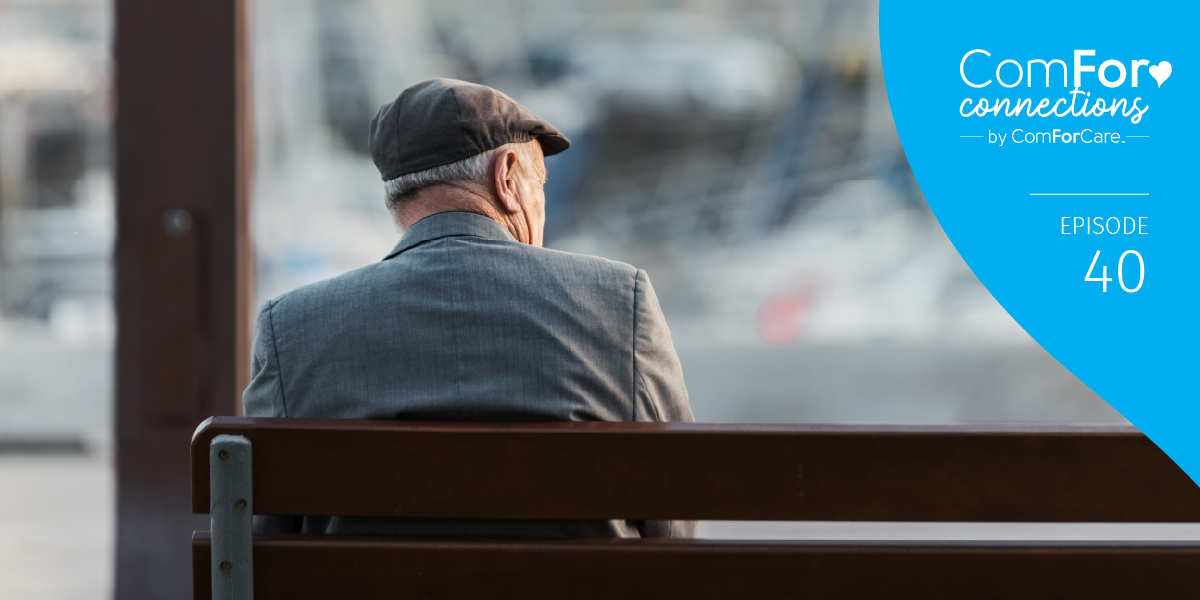
Solo aging is often misunderstood. The phrase often brings to mind images of isolation, loneliness, or worst-case scenarios. But what if we reframed it as an opportunity to build new kinds of support and purpose?
In our latest episode of ComForConnections, Steve Gurney, founder of the Positive Aging Sourcebook, shares why solo aging is more common than most realize and how caregivers can play a powerful role in helping older adults thrive without a built-in family network. His message is rooted in empathy, creativity, and the belief that independence doesn’t have to mean going it alone.
Solo agers aren’t a small or isolated group. According to U.S. Census data, more than 22 million older adults are aging without a spouse or nearby children. And the number is only expected to rise as lifespans increase and family structures evolve.
What surprises many people is how broad the definition really is. A solo ager might be someone who never married or had children. It could be a widower who outlives their spouse. It could be someone estranged from family, or whose children live across the country. And as Steve Gurney points out, even those surrounded by family today may one day find themselves solo through circumstances beyond their control.
That universality is part of what makes this conversation so important. Solo aging is a stage of life most of us are likely to experience, if only for a season. Recognizing that reality helps caregivers, professionals, and families approach it with greater empathy, less stigma, and more readiness to build the support networks people will need.
Even if you have family close by today, there’s no guarantee they’ll be present or able to help tomorrow. That’s why Steve Gurney encourages everyone to think ahead – not just those who already identify as solo agers. Preparing early creates peace of mind, and it allows older adults to shape their future on their own terms rather than waiting for a crisis to force decisions.
Advanced care planning is especially important for solo agers. Without a built-in family network, having a clear plan becomes a critical safeguard. Steve advocates for starting early — ideally at age 18, since any of us could face unexpected illness or injury at any point in our lives. But he also stresses that it’s never too late to begin.
The heart of this planning is conversation. Talking about what matters most, what a “good life” and even a “good death” look like, and who you trust to speak on your behalf if you cannot. For solo agers, these conversations create peace of mind and help ensure that care decisions reflect personal values, not guesswork or crisis-driven choices.
Steve emphasizes the idea of a “personal village”: a blend of friends, neighbors, community groups, and professional caregivers who together form a meaningful safety net. It doesn’t need to be complicated – in fact, he often starts with nothing more than a notebook and a conversation.
“Tell me about your neighborhood. Who do you connect with?” he’ll ask. A client might mention the neighbor across the street who waves hello each morning. That goes on the list. Then he’ll ask about faith communities, clubs, or hobbies. Maybe it’s a garden club they haven’t attended in years, or a church group they once belonged to. Those connections get added, too.
Piece by piece, this becomes a map of support. The goal isn’t to replace professional care, but to strengthen it – weaving in existing relationships that can reduce isolation, stretch resources, and bring joy back into the daily routine. For example, if a neighbor is happy to visit twice a week, that companionship might be exactly what that individual needs to fill the gaps between visits from their professional caregiver.
The personal village approach also honors choice. It recognizes that solo agers, like anyone else, want to decide who’s in their circle of support. Caregivers play a key role in sparking these conversations, surfacing forgotten ties, and encouraging new ones. And in doing so, they help solo agers see that even without nearby family, they’re not truly alone.
Sometimes, the caregiver may be the only human connection a client has in a week. That makes every interaction powerful. In one story Tiffany shared, a caregiver greeted her client one morning only to hear him reply, “That’s the first time I’ve spoken out loud this week.” He was a solo ager, living alone, and though the caregiver only visited twice a week, those visits carried enormous weight.
Moments like these reveal just how much professional caregivers can mean. They are not simply there to tidy the house or prepare a meal. They can become lifelines to meaning, weaving companionship, conversation, and a sense of being seen into everyday care. A simple hello, a short phone call between visits, or a shared hobby can remind clients that their life still holds purpose and connection.
Over the course of this episode, Steve shares more about how empathy, meaningful activities, and advance planning can help solo agers feel supported, connected, and prepared for the future.


Each office is independently owned and operated
and is an equal opportunity employer.
© 2026 ComForCare Franchise Systems, LLC.
Contact Us
(800) 886-4044