
Get Started!

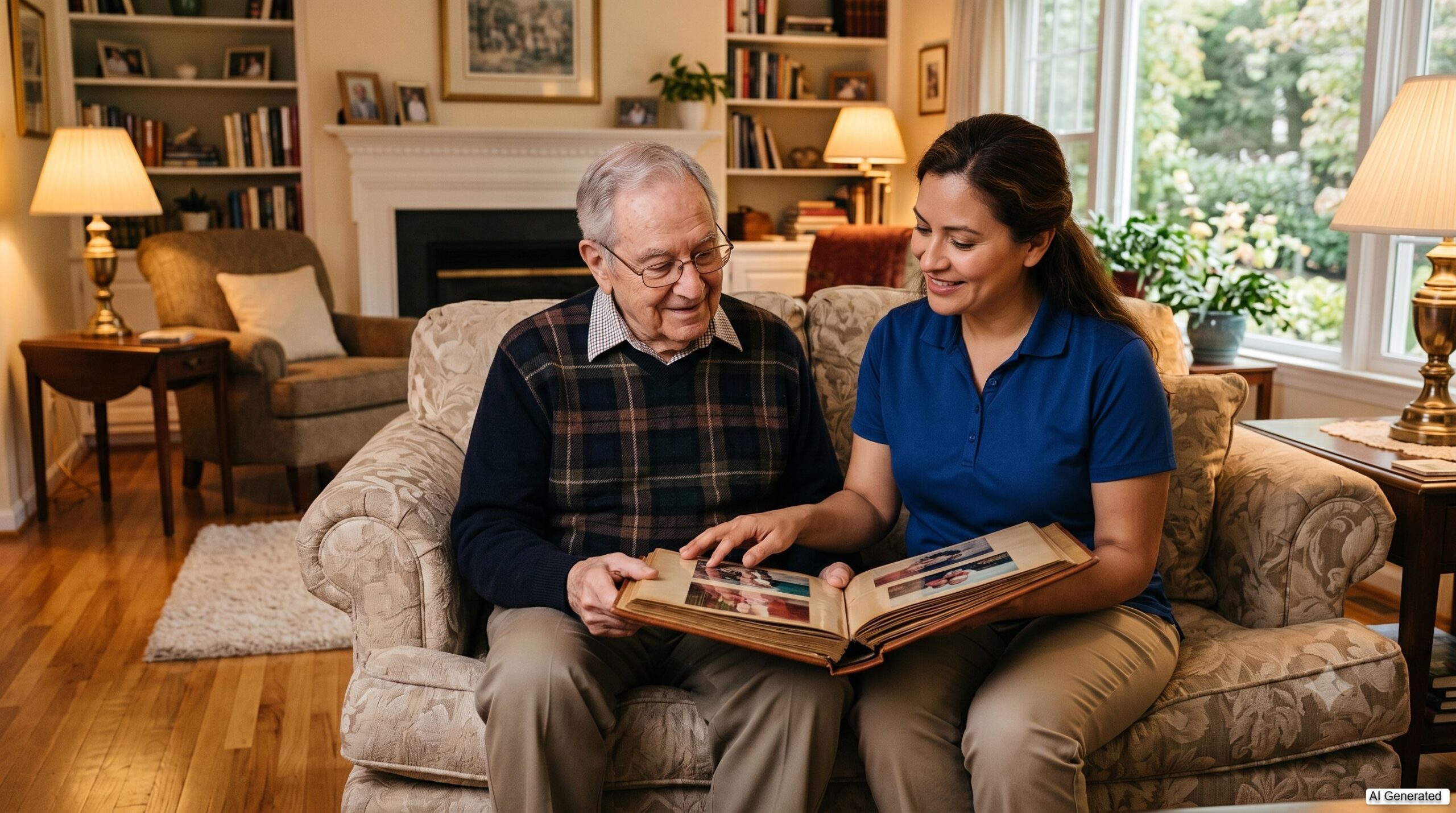
When someone you love has Alzheimer’s or dementia, deciding what comes next can be difficult.
For many families in South Fairfax, the worry begins with small things. Maybe a parent forgets to eat, becomes confused more often, has trouble moving around safely, or simply cannot be left alone for long. You want them to be safe, but you also want them to feel comfortable and cared for.
For families in this situation, the decision often comes down to choosing between a memory care facility and professional dementia care at home. Both can provide valuable support, but the right choice depends on your loved one’s safety, health, daily needs, and how much care they require.
There is no one answer for every family. This blog explains both options simply, so you can decide what feels right for your loved one and their changing needs. So, keep reading till the end.
Memory care is specialized residential care for people living with Alzheimer’s disease or other forms of dementia. It provides a structured environment, trained staff, daily support, and added safety measures for people who can no longer live safely on their own.
In-home dementia care brings professional support to your loved one in the place they already know, their home. A trained caregiver can help with personal care, meals, routines, companionship, supervision, and everyday safety while helping them maintain a sense of familiarity and independence.
For families in South Fairfax, choosing between memory care and in-home dementia care can feel deeply personal. Both options can provide safe, compassionate support, but they meet different needs.
In-home dementia care allows a loved one to remain in familiar surroundings with professional support, while memory care communities provide a structured residential setting with specialized dementia care.
The right choice depends on your loved one’s stage of dementia, safety, daily care needs, home environment, and available support. Rather than asking which option is better, it may be more helpful to ask: Which setting best meets my loved one’s needs right now?
Memory care facilities in South Fairfax provide residential care specifically for people living with Alzheimer’s disease and other forms of dementia. They combine housing, daily assistance, structured routines, and added safety measures in one setting.
Memory care may include:
Every memory care community is different. When comparing facilities in South Fairfax, families may want to ask about staff training, staffing ratios, overnight supervision, activities and outings, safety measures, and how care plans are adjusted as dementia progresses.
In-home dementia care provides personalized support for a person with dementia while allowing them to remain in familiar surroundings. A trained caregiver comes to the home and provides assistance based on the person’s routines, abilities, and changing needs.
In-home dementia care may include:
Safety is an important part of dementia care at home. A good home care plan should consider fall risks, wandering, medication safety, mobility, lighting, and other hazards in the home. Simple changes such as grab bars, improved lighting, door alerts, and secure medication storage may also help create a safer environment, which is where our bathroom safety and fall prevention guidance can help.
For families considering in-home dementia care in South Fairfax, ComForCare can help assess care needs and develop support around the person’s daily routine.
| Expert Insight “Families often think choosing memory care means they’ve failed at caregiving, and choosing home care means they’re avoiding a hard decision. Neither is true. I ask families to focus on one question: what does Mom or Dad actually need right now, today, not five years from now. The right answer changes as dementia progresses, and it’s okay to revisit that question more than once.” — Tazim Mawji, Owner of ComForCare South Fairfax |
In-home dementia care can be a good option when a loved one can remain safely at home with the right level of professional and family support. It allows them to stay close to familiar people, surroundings, and routines while receiving help with everyday needs.
Home care may be suitable when:
The goal is not simply to keep someone at home. It is to make sure home continues to be a safe and supportive place for them.
Memory care may be more appropriate when a person’s dementia-related needs can no longer be safely or practically managed at home. These communities provide a structured environment with ongoing supervision and specialized support.
Families may consider memory care when:
ComForCare helps families in South Fairfax provide personalized dementia care at home, with support that can change as their loved one’s needs change.
ComForCare’s dementia care support includes:
For families considering dementia care at home in South Fairfax, the first step is understanding what your loved one needs today and how those needs may change. ComForCare can help families explore whether professional support at home is an appropriate option while keeping safety, comfort, dignity, and quality of life at the center of the decision.
What Families Say
| “I called ComForCare 3 months ago for my 90 year old father in law who had a broken ankle and dementia. My husband and I moved him into our house, and they made it so much easier.” — Cyndi L., via Google Reviews |
1. Is in-home dementia care in Virginia as safe as a memory care facility?
Yes, in-home dementia care can be safe when the person’s needs can be properly managed at home. Trained caregivers, regular supervision, familiar routines, and appropriate home safety measures can help create a secure and supportive environment.
2. How does memory care in South Fairfax compare with in-home care?
Memory care provides residential, 24-hour support, while in-home care brings professional dementia support to the person’s home. Home care can be arranged for a few hours, daily assistance, or more continuous support based on individual needs.
3. What makes a caregiver qualified to provide specialized dementia care?
A qualified dementia caregiver should be trained to understand memory loss, behavioral changes, communication difficulties, routines, and safety concerns. ComForCare caregivers receive DementiaWise® training to provide person-centered dementia support.
4. When should a family consider a memory care facility instead of home care?
Memory care may be appropriate when a person’s safety, behavioral, or medical needs can no longer be adequately managed at home. Frequent wandering, complex care needs, or the need for continuous supervision may indicate that a residential setting should be considered.
5. How does the GUIDE Program support families managing dementia care at home?
The GUIDE Program provides coordinated dementia care and caregiver support for eligible Medicare beneficiaries. It is designed to help people living with dementia receive appropriate support while continuing to live in their homes and communities when possible.

Each office is independently owned and operated and is an equal opportunity employer.

© 2026 ComForCare Franchise Systems, LLC.