
Get Started!

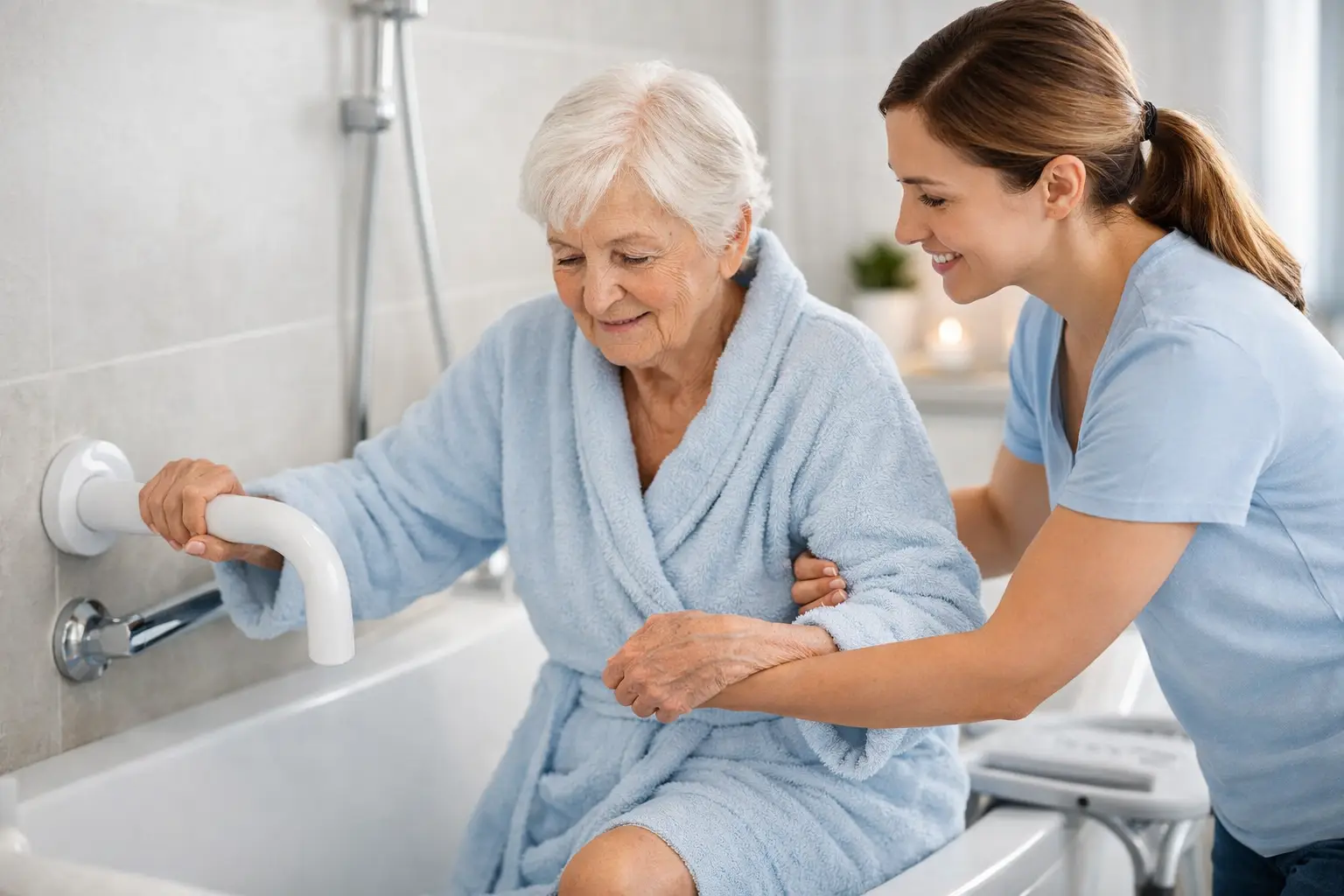
A shower that once took 15 minutes can become the most stressful part of the day for an older adult and the family member trying to help. Bathing assistance for elderly at home is not simply about getting clean. It is about preserving privacy, preventing a painful fall, respecting personal routines, and helping a loved one feel like themselves.
For many families, this need develops gradually. A parent may start skipping showers because stepping over the tub wall feels unsteady. A spouse recovering from surgery may be unable to reach their feet or wash their hair. Someone living with dementia may become confused or frightened by running water, a cold bathroom, or a change in routine. With the right support, bathing can remain a comfortable part of life at home rather than a source of conflict or worry.
Bathing requires more physical ability than many people realize. It can involve walking on wet flooring, balancing while turning, stepping into a tub, bending, reaching, standing for several minutes, and managing water temperature. Arthritis, limited mobility, weakness after a hospital stay, vision changes, Parkinson’s disease, and the effects of a stroke can make each step harder.
Cognitive changes add another layer. A person with Alzheimer’s disease or another form of dementia may not understand why bathing is needed, may resist unfamiliar help, or may have trouble following directions in the moment. This is not stubbornness. It can be a response to fear, discomfort, fatigue, loss of control, or confusion.
Family caregivers often try to manage alone because the task feels personal. Yet helping someone in a slippery bathroom can place both people at risk. A caregiver can strain their back while trying to prevent a fall, and an older adult may feel embarrassed when a loved one has to take over intimate care. Professional in-home support can create a safer, more respectful routine for everyone involved.
Personal care is tailored to the individual. Some older adults only need a steadying hand while getting in and out of the shower. Others need more hands-on assistance with a sponge bath, showering, hair care, dressing, lotion, oral care, or toileting before and after bathing.
A trained caregiver can help prepare the bathroom, set out clean clothing and supplies, check that water is comfortable, and provide support at the pace the client prefers. Care may include assistance with transfer routines, use of shower chairs or handheld showerheads, and careful observation for changes such as new bruising, skin irritation, swelling, or reduced mobility. If there is a concern, the family can be informed so appropriate follow-up can occur.
The goal is never to rush a person through a task. It is to offer only the help needed while protecting as much independence as possible. A client who can wash their own face, choose their clothes, or complete part of the routine independently should be encouraged to do so safely.
The bathroom should be treated as a fall-risk area, especially after an illness, medication change, or recent hospitalization. Small adjustments can make a meaningful difference. A clear pathway, bright lighting, non-slip flooring, grab bars installed by a qualified professional, and a stable shower chair can reduce hazards. Loose bath mats, clutter, and towels left on the floor can quickly become dangerous.
Water temperature matters, too. Older adults may have reduced sensation in their hands and feet, making it harder to recognize excessively hot water. Checking the temperature before bathing and keeping the room comfortably warm can help prevent burns, chills, and discomfort.
It is also wise to consider timing. Many people feel stronger and more cooperative at a certain time of day. A loved one with dementia may do better with bathing in the morning, before late-day fatigue or confusion increases. Someone with Parkinson’s disease may have more mobility when medication is working as intended. A personalized schedule is often safer and more successful than trying to force a routine that no longer fits.
A daily shower is not necessary for every older adult, and insisting on one can lead to distress or skin dryness. On difficult days, a partial bath, sponge bath, or focused grooming routine may be the better option. Washing the face, hands, underarms, skin folds, and perineal area, along with changing into clean clothes, can maintain comfort and hygiene.
This flexibility is especially valuable after surgery, during recovery from illness, or when an older adult is fatigued. The care plan should reflect medical guidance, personal preferences, cultural practices, and the person’s usual habits. Respectful care recognizes that cleanliness does not have to look identical from one household to the next.
The most effective bathing support protects privacy at every stage. That may mean keeping the door closed, covering areas of the body not being washed, explaining each step before it happens, and giving the older adult choices whenever possible. Simple questions such as “Would you prefer a shower or a wash-up today?” or “Would you like your blue shirt or your green one?” can restore a sense of control.
Consistency also matters. Many people are more comfortable when they see a familiar caregiver who understands their preferred soap, hair routine, water temperature, and boundaries. A dependable routine can be particularly reassuring for clients with dementia, who may respond well to calm communication, familiar music, and an unhurried approach.
If a loved one resists bathing, avoid arguing or treating the situation as a refusal to cooperate. Pause, acknowledge their feelings, and try again later if it is safe to do so. Sometimes the issue is as practical as a cold room, fear of slipping, modesty concerns, or pain with movement. Understanding the reason behind the resistance often points to a better solution.
A missed shower alone does not always mean home care is needed. However, a pattern of changes can signal that additional help would benefit both the older adult and the family caregiver. Pay attention if you notice frequent near-falls, fear of using the bathroom, worsening hygiene, unchanged clothing, body odor, skin problems, or a parent who becomes unusually upset when bathing is mentioned.
You may also need support if helping with personal care is affecting your relationship. Adult children and spouses can feel torn between wanting to help and wanting to preserve their loved one’s dignity. Caregiver stress, physical strain, and uncertainty about safe transfers are valid reasons to seek assistance. Bringing in help is not stepping away from care. It can be a practical way to continue showing up as a daughter, son, spouse, or family member rather than carrying every task alone.
A helpful care plan starts with an honest conversation about what is difficult, what remains manageable, and what makes the person feel comfortable. Consider the level of assistance needed, preferred bathing days and times, mobility equipment, skin-care needs, cognitive changes, and whether there are medical instructions from a doctor or therapist.
For families in Marlborough and nearby communities, an in-home evaluation can clarify these details in the actual setting where care will take place. This allows the care team to see bathroom layouts, identify potential fall concerns, and understand the client’s routines. It also helps families plan for related needs such as dressing, toileting, meal preparation, medication reminders, companionship, or respite care.
ComForCare Home Care Marlborough develops personalized support around the whole person, not just one task. When bathing needs are connected to dementia, mobility changes, Parkinson’s disease, or recovery after a hospital stay, trained caregivers and specialized care approaches can provide added structure and reassurance.
A safe bath or shower can be a quiet victory: a loved one feels refreshed, dressed, and ready for the day, while the family can breathe easier. If this daily routine has become stressful or unsafe, a personalized care consultation can help you find a path that protects comfort, dignity, and independence at home.

Each office is independently owned and operated and is an equal opportunity employer.

© 2026 ComForCare Franchise Systems, LLC.