
Get Started!

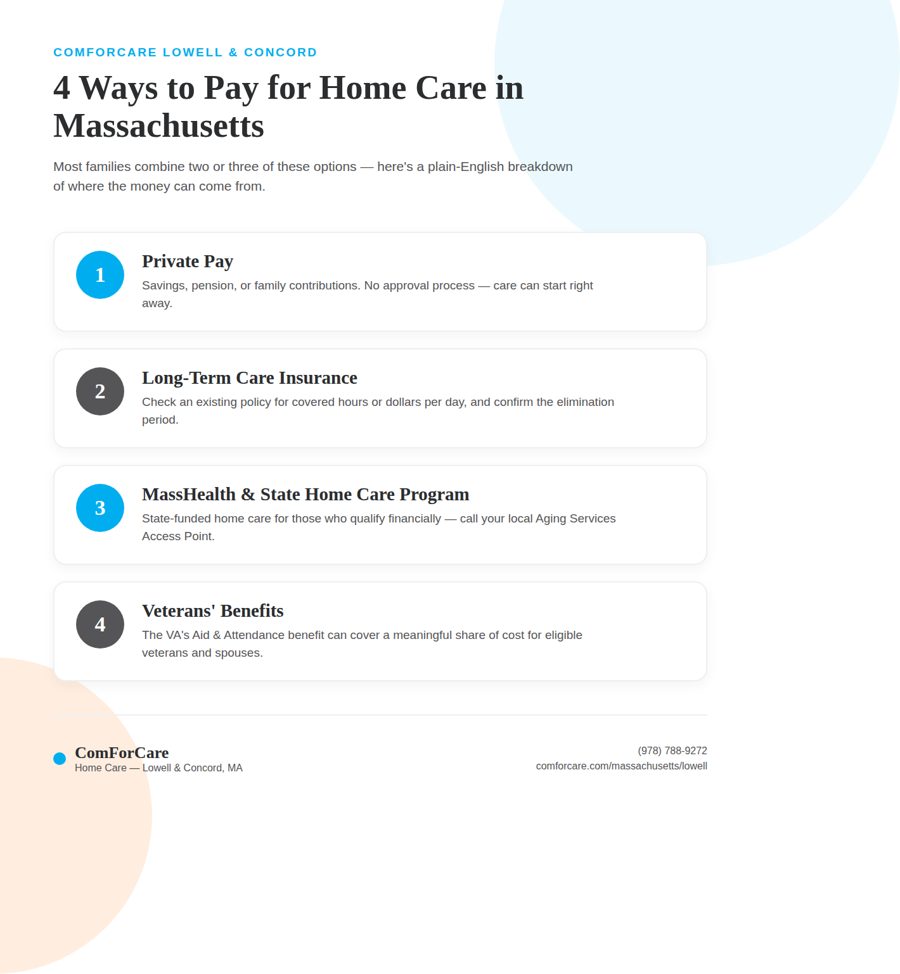
If you’re trying to figure out how to pay for home care in Massachusetts, you’re not alone. It’s one of the first questions families ask once a loved one needs support at home. The good news: there’s more than one way to cover it. Most families end up combining two or three of these options rather than relying on just one.
Here’s a plain-English look at where the money can come from.
Private pay is exactly what it sounds like: paying out of pocket, often from savings, a pension, or family contributions. There’s no approval process and no waiting period, so care can start right away. Many families start here. They add a second source, like insurance or a state program, once they understand their loved one’s ongoing needs.
If your loved one purchased a long-term care insurance policy years ago, now is the time to dig it out. These policies typically cover a set number of hours or dollars per day for home care. The fine print varies a lot, though. Call the insurer directly and confirm the elimination period — the waiting time before benefits start. Ask what documentation they’ll need from a care provider. For many families, long-term care insurance ends up being the most overlooked way to pay for home care in Massachusetts.
Massachusetts runs its own Home Care Program through the state’s Aging Services Network. MassHealth, the state’s Medicaid program, also covers certain home care services for people who qualify financially. Eligibility depends on income, assets, and level of need. It’s worth a call to your local Aging Services Access Point before you assume you don’t qualify. The state’s Home Care Program page walks through the income guidelines and how to apply.
Veterans and surviving spouses may qualify for the VA’s Aid & Attendance benefit. It can cover part of the cost of home care. Few families use it, since the application takes some paperwork. For eligible families, though, it can cover a meaningful share of the monthly cost.
There’s no single right answer here. The best way to pay for home care in Massachusetts usually depends on your loved one’s income and health history. It also depends on how many hours of care they need each week. A good starting point is a free consultation. A care coordinator can walk through your specific situation and point you toward the options you actually qualify for.
If your family is also navigating a recent hospital discharge, our post on transitioning home safely after a hospital stay covers what to expect in those first few weeks.
Every family’s situation looks a little different. That’s why our care team serving Lowell and Concord starts with a conversation, not a sales pitch. Reach out any time. We’re happy to help you think through what’s realistic for your budget and your loved one’s needs.

Each office is independently owned and operated and is an equal opportunity employer.
© 2026 ComForCare Franchise Systems, LLC.