
Get Started!


The United Nations observes the International Day of Sign Languages on September 23. The 2026 theme, “Declaring Deaf People’s Human Rights,” highlights the role of national sign languages in full participation. Communication access is not a decorative addition to care. It affects whether a person can describe symptoms, understand options, express consent, ask questions and direct daily support.
Deaf and hard-of-hearing people are not one communication group. A person may use American Sign Language, spoken language, captioning, writing, assistive listening technology, tactile communication, or a combination. Hearing aids do not create typical hearing and not everyone lip-reads. The respectful starting point is to ask the individual what works best in that situation.
Ask a direct question: “How do you prefer us to communicate?” Record the response where appropriate so the person does not have to explain it repeatedly. Preferences may change by setting. A quick household conversation may be comfortable in writing, while a medical appointment, legal discussion, or complex care-planning meeting may require a qualified interpreter.
Do not assume that a hearing family member should interpret. Relatives may not know specialized vocabulary and the person may not want private information shared through them. Children should not be placed in an interpreting role. Organizations should follow applicable accessibility requirements and use qualified services appropriate to the communication need.

Face the person rather than speaking while looking at a screen or walking away. Keep lighting on the speaker’s face and avoid standing in front of a bright window. Reduce background noise when possible. Speak clearly at a natural pace; shouting can distort sounds and appear angry. One person should speak at a time in a group.
Make sure glasses, hearing devices, communication boards, phones, or other tools are available and working. Before changing the subject, signal the transition. In a signed conversation, maintain a clear visual field and avoid interrupting the person’s hands. These small environmental choices reduce effort and make it easier to participate.
Provide key instructions, schedules, names, and follow-up steps in writing or another preferred format. Use plain language and readable type. For video calls, confirm that captioning or interpreting works before the meeting begins. Automated captions may contain errors, especially with names and medical terms, so important information should be checked.
Use teach-back respectfully: ask the person to describe the plan in their own words or preferred language so the team can confirm that it explained the information clearly. Teach-back is not a test of the individual. It is a check on the communicator. Invite questions and allow enough time for interpretation and response.
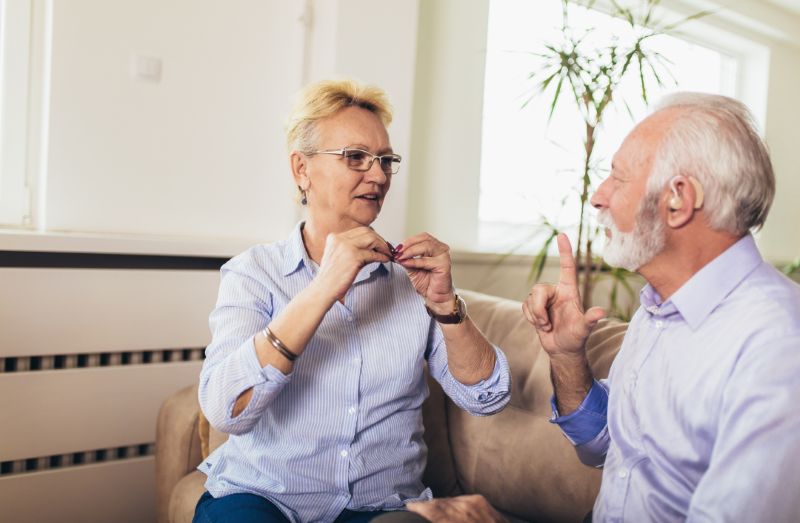
Accessible communication should continue during meals, personal care, transportation, social activities, and emergencies, not only formal appointments. Caregivers can learn the person’s preferred attention signal, important signs or phrases, and communication routines. They should still use qualified interpreters when the conversation requires accuracy beyond their skills.
ComForCare Home Care North San Diego can discuss how communication preferences fit into a non-medical home-support plan. Any interpreter availability, language capacity, or accommodation arrangement should be confirmed for the specific situation. The central principle is steady: speak with the person, not around them and plan access before it becomes urgent.
Communication plans should include emergencies and transitions. Keep preferred communication methods, interpreter contacts and essential written information accessible without exposing unnecessary private details. In a hospital or evacuation setting, tell staff immediately what access is required rather than waiting until a complicated decision must be made.
Needs can change with fatigue, illness, vision changes, dementia, or a new environment. Revisit the plan with the person instead of assuming yesterday’s approach still works. A respectful team notices when communication is breaking down, pauses, changes the method and confirms that the person has enough information and time to make a choice. Document what worked so the next caregiver or professional can begin with an effective approach instead of asking the person to solve the same access problem again.
Families and referral partners can contact ComForCare Home Care North San Diego to discuss non-medical home support tailored to the person’s routines, preferences and current care plan. Services should complement, not replace, medical care or professional advice.
Call Today: 858-247-1005
This article provides general accessibility information and is not legal or medical advice. Organizations should follow current accessibility requirements and individual communication plans.
United Nations. International Day of Sign Languages. September 23, 2026 observance. Original source

Each office is independently owned and operated and is an equal opportunity employer.
© 2026 ComForCare Franchise Systems, LLC.