
Get Started!

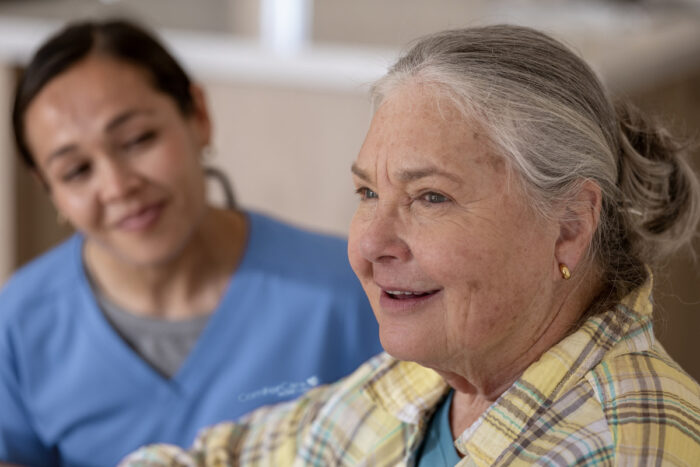
I wish there were a simple formula for knowing when it is time to bring in dementia care at home. There isn’t. What I have instead is two decades of kitchen table conversations, and a pretty good instinct for the signs that tell me a family may need more support. If you’re starting to wonder whether that time has come for your loved one, let me walk you through what I actually look for.
Before I get into those signs, though, I think it helps to see the fuller picture of dementia care in San Diego County and what families across the county are facing.
| Dementia Care Statistics | San Diego County Figure |
| People living with Alzheimer’s or related dementia in San Diego County | 84,000+ |
| Projected by 2030 | 115,000+ |
| Unpaid family caregivers currently supporting a loved one in the county | 94,500 to 102,000 |
| Hours of unpaid care provided annually by families like yours | 128.3 to 138.6 million |
| Rank of Alzheimer’s among causes of death in San Diego County | 3rd leading cause |
Source: County of San Diego Health and Human Services Agency and County of San Diego Alzheimer’s Project reports. Figures represent different reporting periods.
I’ve noticed people throw around “in-home dementia care” like everyone agrees on what it means, and they don’t, so let me clear that up.
In-home dementia care is professional support delivered inside a person’s own home, specifically designed for someone living with dementia or Alzheimer’s disease (a progressive condition that affects memory, thinking, and daily functioning). It’s different from assisted living or a memory care facility, where your loved one packs up and moves somewhere new. With in-home care, nobody packs a single box. Your mom stays in her kitchen with the mismatched mugs she refuses to get rid of. Your dad keeps his recliner and the remote control he’s convinced is broken every other week. I just send a trained caregiver to them.
That distinction sounds small. It isn’t. I’ve watched familiar surroundings genuinely lower confusion and agitation for people with dementia, so keeping someone at home, when it’s safe to do so, tends to be the gentler road.
Here’s the truth nobody likes hearing. Dementia rarely announces itself. It creeps in slowly enough that families explain it away for months, sometimes years, before they call me. “She’s always been forgetful.” “He’s just tired lately.” I understand the instinct. Nobody wants to be the one who says out loud that something is wrong.
So instead of a vague list, here’s what I’m actually listening for when a family describes their situation.
The stove, the door, the medication. This is the category that keeps me up at night on their behalf. A burner left on. A front door found open at 2 a.m. A pillbox that’s suspiciously full on a Thursday when it should be empty. If you catch yourself doing a mental check every time you leave the house, that unease is data, not you being dramatic.
Personal care quietly falling apart. The same sweater three days running. Skipped showers nobody mentions. Milk in the fridge that’s been expired long enough to have its own zip code. I try to gently remind families this usually isn’t stubbornness. It’s that the sequence of steps behind “take a shower” has gotten genuinely hard to hold onto.
Getting lost somewhere they know by heart. If your dad has ever called you confused about how to get home from the grocery store he’s shopped at for two decades, that’s not a fluke I’d shrug off.
You, running on empty. I say this to every single family I meet with, without exception. If you’re the one holding this together right now and you’re exhausted, short tempered, or quietly resentful, that counts. Your wellbeing isn’t a footnote here. It’s part of the actual decision.
The afternoon and evening turn. A lot of families don’t know there’s a name for it, but sundowning (increased confusion and agitation in the late afternoon or evening) is extremely common, and it’s often the single hardest stretch of the day to manage solo.
The same question, five times, in ten minutes. Ordinary forgetfulness is losing your keys. This is different, and when I hear a family describe it, I take it seriously right away.
If two or three of those sound familiar, I’d say it’s time to at least have the conversation, even if you’re nowhere near ready to act on it yet.
I hear the same handful of reasons on repeat, practically word for word, from families all over Central San Diego and La Jolla.
Every one of those is understandable. None of them are quite right, in my experience. Bringing in professional support isn’t giving up independence, it’s often what protects it. I’m not walking in to take over somebody’s life. I’m filling the gaps so your loved one can keep living in their own home safely, for longer, instead of getting rushed into a facility during a crisis nobody saw coming.
People picture a stranger sitting stiffly in the corner of the living room, and honestly, that image needs to die. When I place a dementia trained caregiver in someone’s home, here’s what an ordinary day actually involves:
I build the mix around where your loved one actually is, not a generic template. Early stage might mean a few check in hours a day. Later stages usually call for something steadier, sometimes round the clock.
I build every plan around your loved one’s actual stage and actual personality, not a package pulled off a shelf. My caregivers are trained specifically in dementia care, so I make sure they know how to redirect instead of argue, how to lower triggers for agitation, and how to keep routines predictable, because predictability genuinely calms the dementia brain. I’ve seen it happen enough times to trust it.
At ComForCare Home Care, I serve families throughout Central San Diego and La Jolla. I believe understanding dementia is the first step toward providing better care, which is why I value resources like Dementia Wise and its focus on person centered dementia care. I also stay involved after care starts. Dementia shifts over time, so I check in and adjust the plan instead of setting it once and disappearing.
If any part of this sounded like your own family, call me. You don’t have to carry this by yourself, and you don’t have to wait for the worst version of the situation before you ask for help.
Hasan Ali
President, ComForCare Home Care San Diego & La Jolla
Serving Central San Diego for 20+ Years | San Diego Regional Center Vendor | Co-Founder, Special Needs Business Coalition of San Diego | Alzheimer’s Association Do What You Love Committee Member. Read more about Hasan.

Each office is independently owned and operated and is an equal opportunity employer.
© 2026 ComForCare Franchise Systems, LLC.