
Get Started!

Summary
The 10 highest-impact home modifications — from grab bars and walk-in showers to wider doorways and smart home tech.
Which rooms pose the greatest fall risk and why?
How home modifications work best alongside professional in-home care — not instead of it.
What Medicare and insurance may or may not cover for accessibility upgrades.
Key takeaway: Start with the bathroom. It is the highest-risk room in the home. Even small changes like grab bars and non-slip flooring can prevent serious falls.
For families exploring senior personal care services in Falls Church, one of the most impactful steps is ensuring the home itself supports safe, independent living. The right home modifications—combined with professional in-home caregiving—can dramatically reduce the risk of falls, ease daily routines, and help older adults age in place with lasting confidence and dignity. At ComForCare Home Care – Northern Fairfax, we work alongside families every day, and we have seen firsthand how small design changes create transformative results.
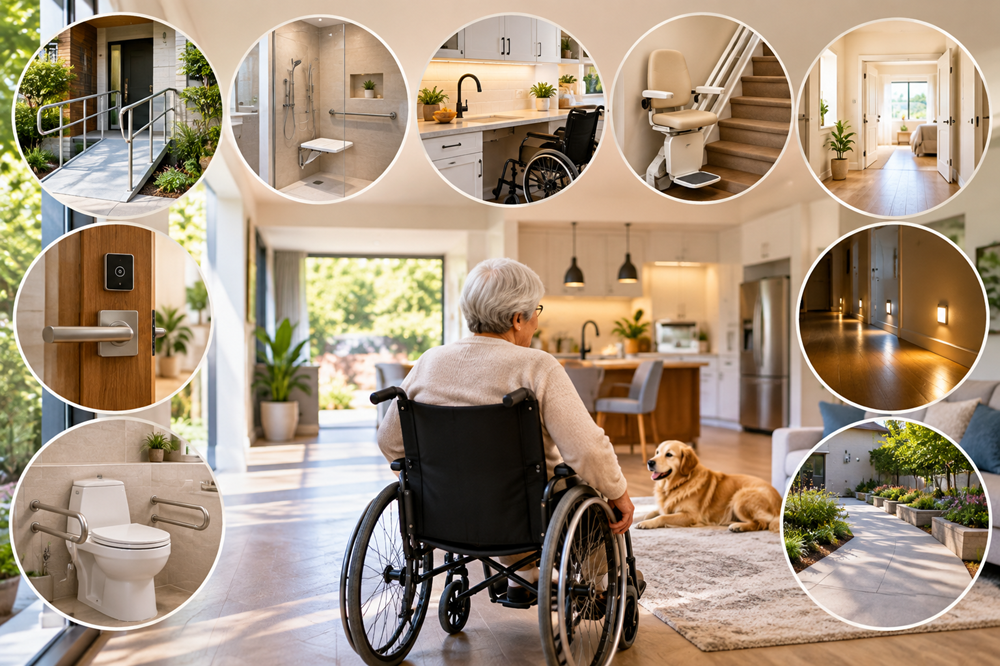
Here are 10 practical, accessible home design ideas that can make a meaningful difference for seniors with disabilities in Falls Church and across Northern Fairfax.
The bathroom is the highest-risk room in the home for elderly adults. Installing grab bars near the toilet, in the shower, and along the tub allows seniors to move safely without depending on towel racks or walls for support. Opt for ADA-compliant bars rated for at least 250 lbs, positioned at the correct height for your loved one.
Slick hardwood, tile, or polished floors are serious fall hazards. Non-slip rugs, textured flooring, or anti-slip adhesive strips in high-traffic areas—especially kitchens, bathrooms, and entryways—create a much safer walking surface. This is one of the most cost-effective changes families can make when taking care of old people at home.
Standard doorways (32 inches) are often too narrow for wheelchairs or walkers. Widening key doorways to at least 36 inches improves accessibility significantly. Offset hinges are a lower-cost alternative that add 1–2 inches of clearance without full door replacement.
Traditional bathtubs are one of the leading causes of falls among older adults. A walk-in or roll-in shower with a built-in bench, handheld showerhead, and low threshold removes the step-over hazard entirely. Combined with personal care for elderly at home from a trained caregiver, bathing becomes a safe, dignified routine.
Dimly lit hallways and stairwells increase fall risk dramatically. Motion-activated nightlights, under-cabinet kitchen lighting, and brighter bulbs in living areas help seniors with vision changes navigate their home safely—especially during nighttime hours.
Cluttered furniture layouts create obstacles for seniors using mobility aids. Ensure all main pathways are at least 36 inches wide and free of cords, rugs, or furniture corners. Private caregivers for elderly can assist in rearranging and maintaining safe traffic flow throughout the home.
For multi-story homes, stairs are one of the greatest barriers to independent movement. A stair lift provides a safe, motorized solution, while a portable or permanent ramp at exterior entrances eliminates the step threshold that can trip or block seniors with limited mobility.
Pull-out shelves, D-ring cabinet handles, a lever-style faucet, and a lower countertop section can all significantly improve kitchen accessibility. Personal care for elderly often includes meal preparation—and a well-adapted kitchen makes this task safer and more enjoyable for caregivers and clients alike.
Voice-activated assistants, automatic lights, video doorbells, and remote-controlled thermostats reduce the physical demands of daily living. Smart medication dispensers ensure doses are not missed, which is especially important for seniors managing multiple prescriptions. These tools complement in-home care rather than replace it.
When possible, relocating the bedroom to the ground floor eliminates the need to navigate stairs daily. Pairing this with elder care services near Falls Church means your loved one has everything they need—sleeping, bathing, eating—within safe, easy reach.
Home modifications create the foundation—but they work best alongside professional support. ComForCare Home Care – Northern Fairfax provides senior personal care services in Falls Church that include personal hygiene assistance, fall prevention strategies, mobility support, and compassionate companionship. Our caregivers are trained through our proprietary DementiaWise® and Parkinson’s Pathways programs, equipping them to serve seniors with a wide range of conditions.
Creating an accessible home environment is one of the most powerful investments a family can make in a loved one’s long-term safety and well-being. These 10 home design ideas, paired with professional senior personal care services in Falls Church from ComForCare Home Care – Northern Fairfax, give older adults the best possible chance of aging in place with comfort, independence, and dignity. Reach out to our team today for a free in-home consultation and discover how we can customize a care and safety plan for your family.
Q1: What are the most important home modifications for seniors with disabilities?
Grab bars, non-slip flooring, improved lighting, walk-in showers, and wider doorways are consistently among the highest-impact changes. These address the most common fall and mobility hazards in the home.
Q2: Can I combine home modifications with senior personal care services in Falls Church?
Absolutely. Home design improvements and professional in-home caregiving work hand in hand. ComForCare Home Care – Northern Fairfax can conduct an in-home assessment to help identify safety gaps alongside recommending appropriate care services.
Q3: How do I find reliable elder care services near me in Northern Fairfax?
Look for licensed, insured agencies with documented caregiver training programs and positive reviews from clients. ComForCare Home Care – Northern Fairfax is a trusted provider offering comprehensive personal care for elderly residents throughout Falls Church and the surrounding area.
Q4: Are home modifications covered by Medicare or insurance?
Some modifications may qualify under Medicaid home and community-based waiver programs or Veterans’ benefits. Standard Medicare does not typically cover structural modifications, but some supplemental plans and long-term care insurance policies may offer partial coverage.
Q5: When should I consider professional personal care for elderly at home?
If your loved one is struggling with bathing, dressing, medication management, or moving safely around the home, it is time to explore professional in-home caregiving. ComForCare Home Care – Northern Fairfax offers flexible care plans ranging from a few hours per week to full-time support.
Q6: Do private caregivers for elderly need specialized training?
Yes. Quality caregivers should be trained in personal care, safety protocols, and—where relevant—conditions like dementia or Parkinson’s disease. Every caregiver at ComForCare Home Care – Northern Fairfax completes rigorous training, including our proprietary DementiaWise® curriculum.

Each office is independently owned and operated and is an equal opportunity employer.

© 2026 ComForCare Franchise Systems, LLC.