
Get Started!

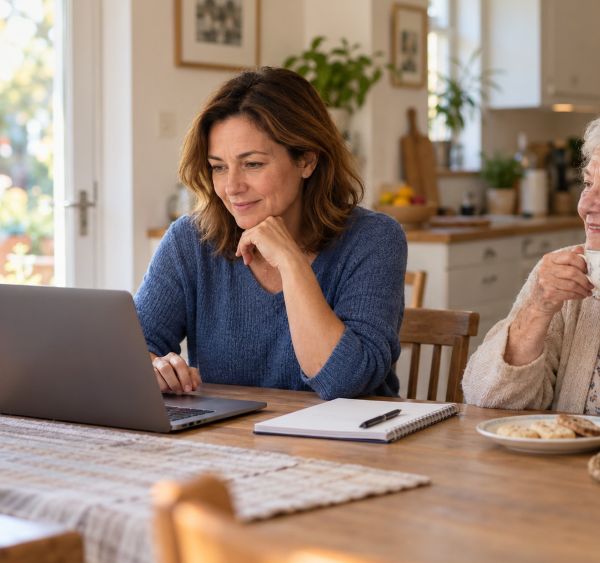
Caring for someone living with dementia can be rewarding, but it can also be demanding. Family caregivers often have to balance caregiving with work, household responsibilities, appointments and their own needs.
A study published October 1, 2026, in the Journal of Applied Gerontology looked at whether online education could help informal caregivers of people living with dementia. The results were encouraging, while also highlighting why it is important to look closely at how research is conducted.
The study included 64 caregivers who completed measures of quality of life and caregiver burden before and after a four-week online training program.
After completing the program, participants reported:
These findings suggest that online caregiver education may be a useful way to provide information and support to families.
However, there is an important limitation.
The study did not include a control group. That means researchers could not compare participants with a similar group that did not receive the training. Other factors occurring during those four weeks could have contributed to the changes participants reported.
As a result, the study shows an association between participating in the training and improved outcomes, but it does not prove that the online program itself caused those improvements.
That distinction is important when considering new research.

Caregivers do not always have the flexibility to attend an in-person class.
Transportation, work schedules, supervision needs, appointments and household responsibilities can make traditional educational programs difficult to access. Online learning may reduce some of these barriers by allowing caregivers to participate from home and, depending on the program, revisit information when they have time.
For some families, that flexibility can make education more realistic.
But online learning can create barriers of its own. A caregiver may have limited internet access, difficulty using technology, limited access to a suitable device, or simply no quiet time to concentrate.
Effective online caregiver education should consider:
Education is not automatically supportive simply because it is delivered online. The information should be understandable, relevant and connected to resources caregivers can use when they need additional help.
Caregivers can sometimes finish a training lesson with many helpful ideas but still wonder what to do during a difficult moment at home.
One way to make education more practical is to connect new information to one current challenge.
A caregiver might:
For example, a family learning about communication may try using shorter questions and allowing additional time for a response. A family working on daily activities might offer two meaningful choices rather than asking an open-ended question.
These are general examples, not treatment instructions. Individual needs can vary and caregivers should seek guidance from appropriate professionals when a situation requires clinical advice.

Caregiver education can provide knowledge, ideas, and reassurance. But information alone cannot create more hours in the day.
Caregiver burden may be influenced by many factors, including sleep disruption, financial pressure, health concerns, difficult family dynamics, or the need for more hands-on assistance.
A caregiver who cannot complete an online course has not failed.
Sometimes the problem is not a lack of motivation. The caregiver may need a different format, shorter learning sessions, printed information, an interpreter, a support group, or respite care.
The goal should be to make support easier to access, not to give caregivers another responsibility they feel they must complete perfectly.
If a caregiver is experiencing severe emotional distress, thoughts of self-harm, abuse, unsafe wandering, sudden significant behavioral changes, or an acute medical concern, prompt help from an appropriate emergency or clinical resource is important.
Online education can be one piece of a larger support system.
Before beginning a course, caregivers may want to identify someone they can contact when questions come up. Depending on the situation, that could include a physician, dementia-care professional, social worker, caregiver resource center, or support group.
It can also help to keep a short list of questions that require professional guidance rather than relying on online information alone.
For families supporting someone with dementia, learning does not have to mean doing everything alone.

The 2026 study offers an encouraging look at the potential of online education for dementia caregivers. Participants reported better quality of life and lower caregiver burden after the four-week program, particularly those who began with greater burden.
At the same time, the lack of a control group means the findings should be interpreted cautiously. More research, including studies with stronger designs, can help clarify how much online caregiver education contributes to meaningful improvements.
For now, online learning may be most useful when it is treated as one part of a broader support plan, alongside professional guidance, practical resources, respite and help that reflects the caregiver’s actual circumstances.
Family caregivers give so much of themselves. The right education can offer useful tools, but caregivers also deserve support that recognizes when information is not enough and additional help is needed.
At ComForCare Home Care North San Diego, we understand that every family’s caregiving situation is different. If your family could use additional support at home, we’re here to help you explore options that fit your needs.
Need help? Call ComForCare today: 858-247-1005

Each office is independently owned and operated and is an equal opportunity employer.

© 2026 ComForCare Franchise Systems, LLC.