
Get Started!

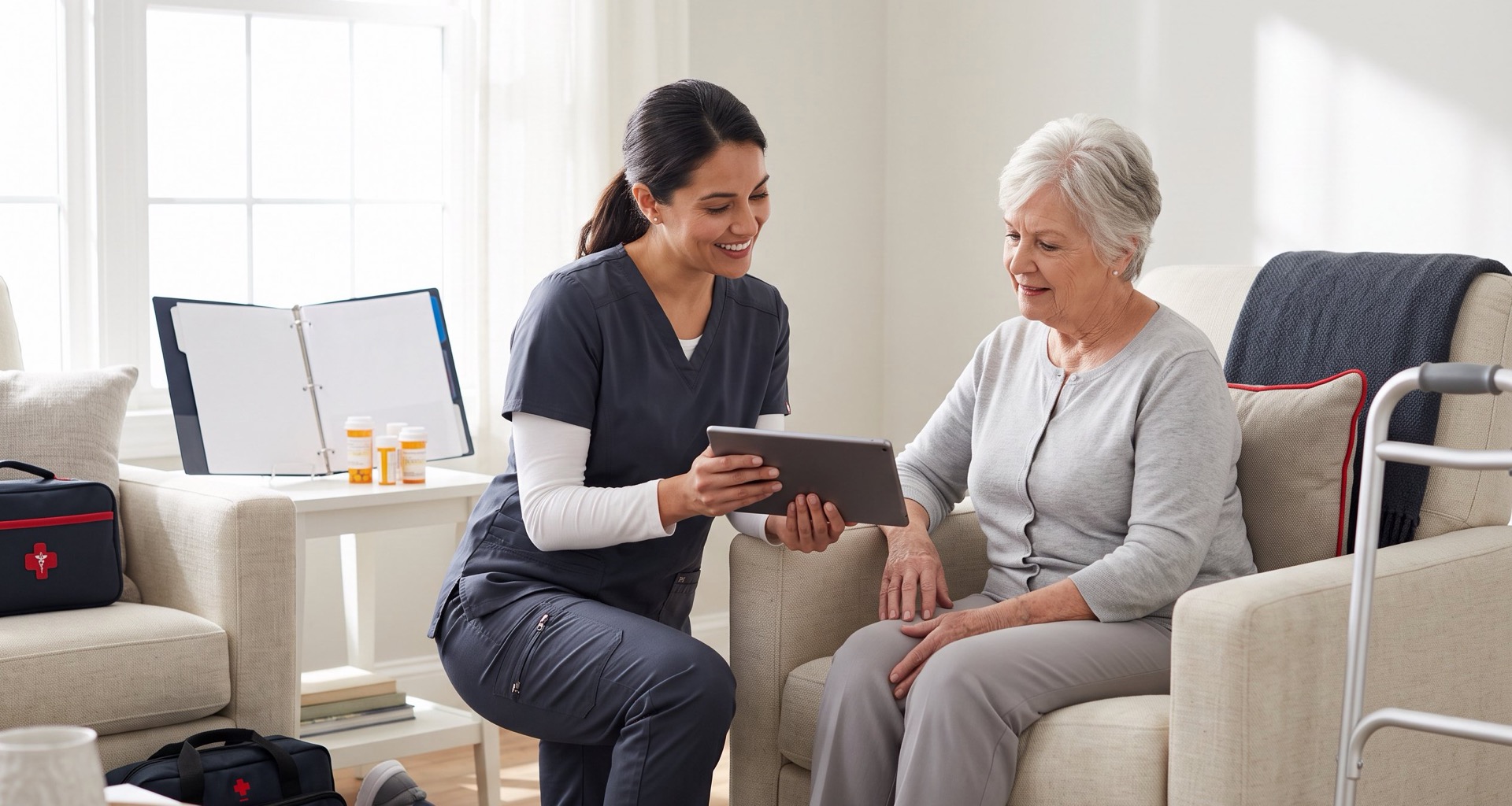
To set up home care after a hospital stay at Advocate Good Samaritan Hospital in Downers Grove, ask the hospital nurse for the care manager or social worker before discharge. Request the written discharge plan, current medication list, follow-up appointments, equipment instructions, and any orders for skilled home health. Then arrange non-medical in-home help for daily routines such as bathing, meals, mobility support, medication reminders, light housekeeping, and transportation.
The best plan may use both services: clinical needs go to the medical team or home health, while daily-living needs go to non-medical home care.
If possible, begin arranging support before the person is already home. You can say:
“Before discharge, can we review the plan for care at home with the care manager or social worker? We need to understand what medical services, equipment, and daily help will be needed.”
Advocate Good Samaritan Hospital says its care managers coordinate care and discharge, while hospital social workers can help arrange post-hospital services and locate community resources. (Advocate Good Samaritan Hospital patient information)
Use this pre-discharge checklist, adapted from Medicare’s discharge-planning guidance:
The discharge paperwork should be the family’s source of truth for condition-specific instructions and warning signs. Bring the paperwork and updated medication list to follow-up appointments. Medicare’s Your Discharge Planning Checklist also recommends writing down important names, phone numbers, tasks, and appointment details.
“Home care” can mean different things. Separating clinical services from daily support helps families contact the right provider.
Skilled home health consists of medical or therapy services ordered by a clinician. Medicare says covered home health may include intermittent skilled nursing, physical therapy, occupational therapy, speech-language pathology, medical social services, limited home health aide services connected to skilled care, supplies, and durable medical equipment when eligibility requirements are met.
A clinician must order the care, and a Medicare-certified agency must provide it. Medicare eligibility also includes needing part-time or intermittent skilled services and meeting its homebound requirements. Coverage depends on the individual’s situation and plan. Medicare generally does not pay for custodial or personal care when that is the only service needed. See Medicare’s Home Health Services Coverage for details (coverage details checked October 2026).
Advocate Health at Home is one option for medical home nursing, therapy, respiratory care, equipment, and other clinical services in the Chicago area. Advocate says a liaison can meet with the patient before going home to discuss goals, concerns, and medical needs. A doctor’s referral is required for its home health services. (Advocate Health at Home)
Non-medical home care supports everyday routines. Depending on the agency and location, services may include:
Illinois describes home services agencies as non-medical providers that assist with activities of daily living, housekeeping, personal laundry, and companionship. (Illinois Department of Public Health: Home Services Agencies)
Non-medical care does not replace nursing, wound care, therapy, medication administration, or other medical treatment. A person may need both skilled home health and non-medical home care at the same time.
A simple first-week plan can turn discharge instructions into specific assignments:
There is no fixed schedule that fits everyone. A few daytime hours may be enough for someone who mainly needs help with morning routines and meals. Another person may need support around transfers, appointments, or supervision at particular times.
Hypothetical example: A parent returns home after a short hospital stay with a walker, new prescriptions, and a follow-up appointment the next week. A clinician-arranged home health visit addresses the ordered clinical needs. The family schedules non-medical help for the first five mornings to assist with dressing, breakfast, movement through the home, medication reminders, and preparing lunch. They reassess after the first week instead of assuming the original schedule will always be needed.
This is a planning example, not a prescribed care plan or a client result.
For a senior returning to a Downers Grove home with mobility problems or fall concerns, prepare the areas the person will use most:
MedlinePlus offers additional home preparation guidance after a hospital stay, including bathroom setup and ways to keep essential items within reach. The CDC also recommends discussing fall risk and medicines that may cause dizziness or sleepiness with a clinician or pharmacist, having vision checked, removing trip hazards, adding grab bars, and using stair railings. (CDC fall-prevention guidance)
When comparing agencies serving Downers Grove, Naperville, or nearby western suburbs, ask:
ComForCare’s Downers Grove in-home care page is one local option. ComForCare Naperville & Downers Grove describes non-medical transitional support that may include reviewing discharge instructions, medication reminders, personal care, meals, laundry, light housekeeping, companionship, follow-up appointment support, and identifying trip hazards. Services vary by location, so confirm the requested tasks and availability during a consultation. (ComForCare transitional care)
A practical first-48-hours check can include:
For condition-specific questions, medication directions, or changes to watch for, follow the patient’s discharge paperwork and contact the designated care team.
Families seeking non-medical transitional support in Downers Grove can contact ComForCare Naperville & Downers Grove at (630) 536-8501 to discuss a personalized care schedule. The office is located at 1240 Iroquois Ave, Suite 404, Naperville, IL 60563. Each ComForCare office is independently owned and operated, and services are non-medical.

Each office is independently owned and operated and is an equal opportunity employer.

© 2026 ComForCare Franchise Systems, LLC.