
Get Started!

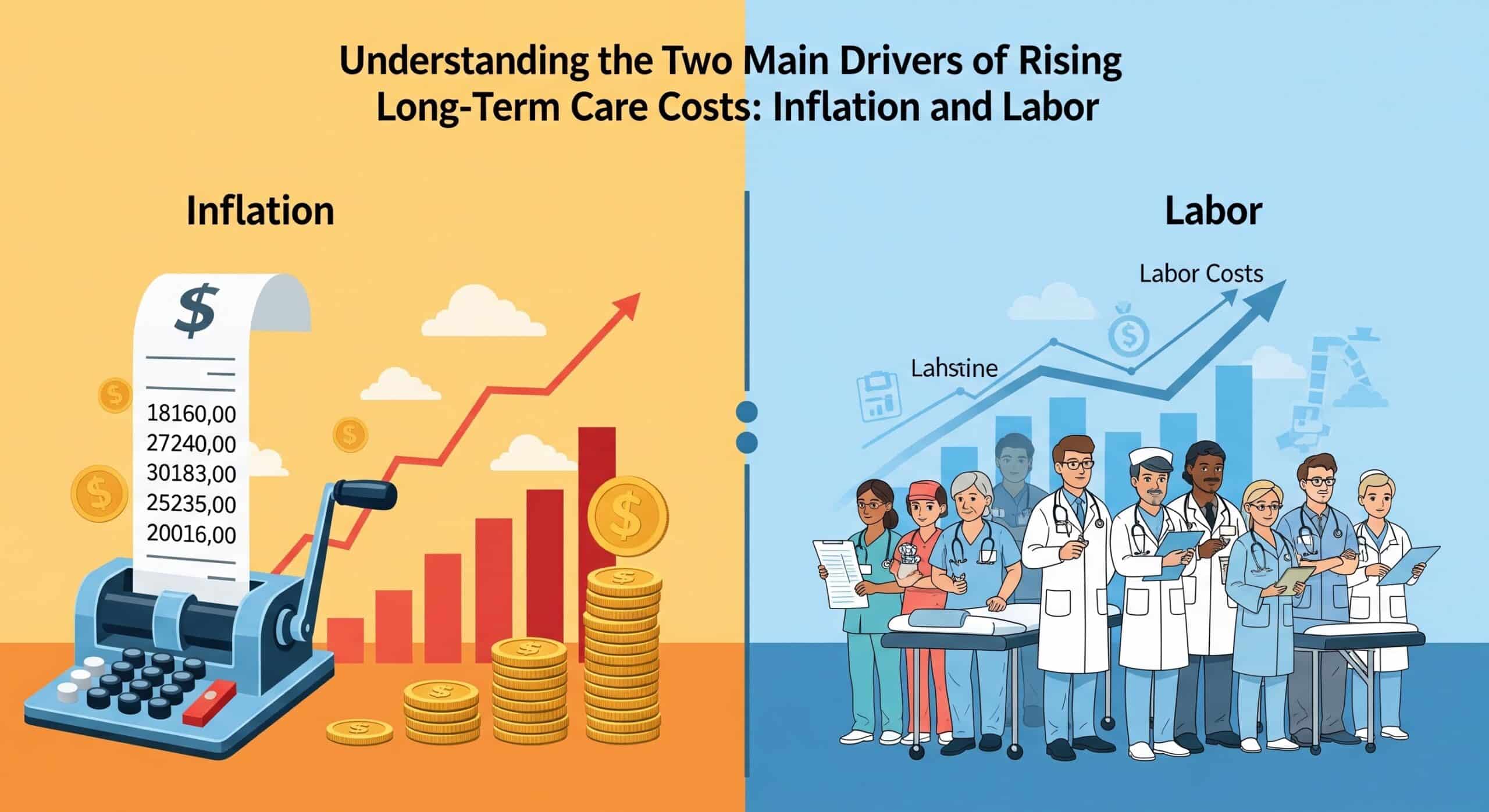
For years, families have watched long-term care costs rise, but why are the increases so dramatic, especially in states like North Carolina? The 2024 Cost of Care Survey offers a clear picture: the two most significant factors driving the increase in care expenses—both locally and nationally—are inflation and labor costs.
Factor 1: Inflation’s Outsized Impact
The general rise in the cost of living (inflation) affects every aspect of a care facility’s operation, from utilities and food service to administrative overhead. When these operational expenses increase, they must be reflected in the prices paid by residents and clients. The survey found that care cost increases continue to outpace the general inflation rate, which means the gap between what people save and what they will eventually need is growing.
Factor 2: The Critical Role of Labor Costs
The long-term care industry relies heavily on a skilled and dedicated workforce, including home health aides, nurses, and support staff. With high demand and persistent staffing challenges, wages are increasing to attract and retain quality caregivers. Since labor is the largest component of care delivery, this rise in wages translates directly to higher service costs for consumers. This factor is particularly critical for home care services like Home Health Aides and Homemaker Services, which saw a 7% year-over-year increase in North Carolina to a median annual cost of $68,640.
Finding Quality Care and Funding SolutionsFacing these rising costs can feel overwhelming, but tools are available to help you plan:
Taking action now to create a plan—integrating your values, preferences, and goals—is the best way to navigate the aging journey with confidence.
Reference/Source:For more details and access to planning tools, please see the full 2024 Cost of Care Survey report details and visit the CareScout website.

Each office is independently owned and operated and is an equal opportunity employer.
© 2026 ComForCare Franchise Systems, LLC.