
Get Started!

By calling 407-678-9363 or visiting OrlandoSeniorHelpDesk.org, you can connect with experts in senior services who can provide advice and referrals for everything from senior-living options to Medicare advice, end-of-life care, medical supplies, legal services, and much more. The Orlando Senior Help Desk is a 501(c)(3) nonprofit organization, and there is no fee for its services.
The ADRC empowers caregivers with the knowledge, support, and programs to help them prepare for and cope with the challenges that lie ahead. The nonprofit organization offers a variety of peer support groups, care navigation opportunities, educational programs, and wellness events to help caregivers with the day-to-day tasks of caring for their person living with the disease, as well as maintaining their own health. ADRC also provides dementia-informed education to the medical and general community. Visit ADRCCares.org or call 407-436-7750

Nurse Pop-Ins & Senior Concierge aims to empower seniors and their families with the knowledge and support needed to make informed decisions about Independent Living, Assisted Living, or Memory Care communities. The organization strives to create a positive impact on the lives of seniors, ensuring they experience comfort, dignity, and an improved quality of life. Visit NursePopIns.care or call 407-494-5220 to learn more.

Brain Academy offers neuroscience courses and Brain Coach Certification for brain-based coaching. It is a global education platform dedicated to delivering neuroscience courses, neuroscience coaching certification, and brain-based coaching programs designed for coaches, leaders, therapists, educators, and professionals who want real, measurable impact. Learn more by visiting BrainAcademy.com or emailing [email protected].
This informative pamphlet, available to download in both English and Spanish, explains the basic features of private-duty home care services, addresses many common myths about private-duty home care, answers many frequently asked questions, and much more. This resource was developed in partnership with Alliant Health Solutions, QIN-QIO Centers for Medicare and Medicaid Services, the Florida Hospital Association, and ComForCare – Greater Orlando.
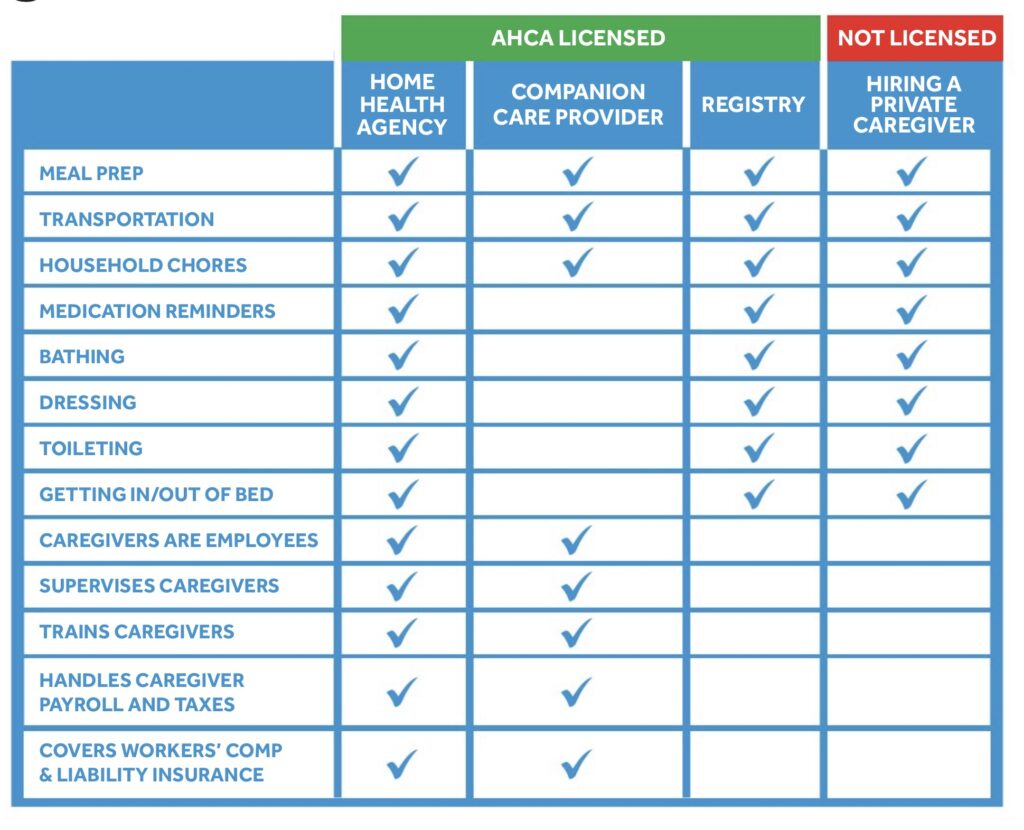
The demand for in-home care for seniors and other loved ones needing assistance is skyrocketing, and that has created an equally exponential jump in the number of businesses offering these services. With so many in-home care options, it’s essential to ask the right questions and understand the subtle – but critically important – differences between one provider and another. Here’s a handy chart and five must-ask questions to get a conversation started with a potential provider. (Spoiler: there’s no substitute for tenure and experience in this industry. Choosing an in-home care company that has been in business for more than five years will give you the best chance to get the right answers to the questions below.)
Is the Provider an “Agency” or a “Registry”?
This is a big one. A home-health agency employs its caregivers as traditional W-2 employees. That’s important because the agency is responsible for the screening, training, evaluation, tax withholding, and insurance coverage of each caregiver. Registries simply refer independent contractor caregivers to clients. Registries may not supervise, manage, or train the caregivers they refer, as those caregivers are independent contractors under Florida law.
Is the Provider Licensed?
In the State of Florida, companies offering in-home care services, at any level, must be licensed by the Florida Agency for Health Care Administration (AHCA). Families hiring a private caregiver directly are subject to different rules. Don’t ever be afraid to ask for a provider’s license number, and if they hesitate to give it, that’s a sure sign of trouble. The license number should also be visible on any of the company’s advertising – physical, digital, TV, etc.
What Level of Care Do They Provide?
Take a look at the chart on this page. Licensed home-health agencies offer a broader range of services than companion-care providers. Providers that offer only companion-care services generally do not provide hands-on personal care. If a client requires more – such as hands-on assistance with Activities of Daily Living (ADLs) like bathing, dressing, toileting, and transferring in/out of bed, etc. – be sure the provider is licensed by AHCA to provide those services.
What Are the Payment Options?
In-home care can be expensive, but the best agencies offer multiple payment options. Care can be covered by long-term care insurance, but not all agencies take it. In addition, find out if the agency will accept an assignment of benefits (AOB) and if they will file all the required paperwork. A good agency should also explore any military veterans’ benefits that might be available, as well as other creative funding options.
Are the Company’s Leaders Medical Professionals?
This is an important question to ask and an easy one to answer. Are the leaders/owners of a provider Registered Nurses, medical doctors, or other accredited professionals? Or, are they simply business people hoping to participate in a quickly growing industry?

Each office is independently owned and operated and is an equal opportunity employer.
© 2026 ComForCare Franchise Systems, LLC.