
Get Started!


September’s Falls Prevention Awareness Month offers an important reminder: reducing fall risk is rarely about one exercise, one home modification, or one conversation. It often involves looking at the bigger picture, including movement, health, vision, the home environment and everyday support.
The Administration for Community Living encourages older adults and caregivers to consider physical activity, conversations with healthcare professionals, regular vision care, safer home environments and evidence-based community programs. Because every person’s needs and routines are different, fall prevention should support independence, dignity and choice rather than make someone feel watched or restricted.
Before moving furniture or suggesting a new exercise routine, start by asking what the older adult has noticed.
Has getting up from a chair become more difficult? Is a hallway too dark at night? Has dizziness appeared after a medication change? Has fear of falling caused the person to become less active?
Listening first can reveal concerns that might otherwise be missed. An older adult may already know which parts of a daily routine feel difficult but may not have had an opportunity to talk about them.
If there has been a fall or there are new symptoms such as dizziness, weakness, pain, fainting, or a sudden change in mobility, contact an appropriate healthcare professional promptly.
Physical activity can help support strength, balance, flexibility, and mobility. However, the right activities depend on a person’s health, abilities and goals.
Instead of simply asking, “Are you exercising?”, consider asking:
“What daily movement would you most like to make easier?”
For one person, that might mean standing safely from a favorite chair. For another, it could be walking to the mailbox, getting into the shower, or moving safely around the kitchen.
Connecting movement to meaningful everyday activities can make fall-prevention efforts feel more practical and achievable.
If there are significant balance concerns, pain, weakness, or new symptoms, consult a physician or qualified rehabilitation professional before beginning a new exercise program.
Medication side effects, vision changes and certain health conditions can contribute to fall risk. Families can help by maintaining an accurate medication list and noting changes such as dizziness, unusual sleepiness, blurry vision, or increased unsteadiness.
These observations can be useful when speaking with a physician or pharmacist.
Never stop, reduce, or rearrange medications without guidance from the prescribing clinician or pharmacist. The goal is to create a safer conversation with healthcare professionals, not to make medication changes independently.
Vision care is also an important part of fall prevention. Make sure glasses are clean, easy to find and appropriate for the person’s needs. At home, pay attention to lighting that creates glare, shadows, or difficulty seeing changes in floor surfaces
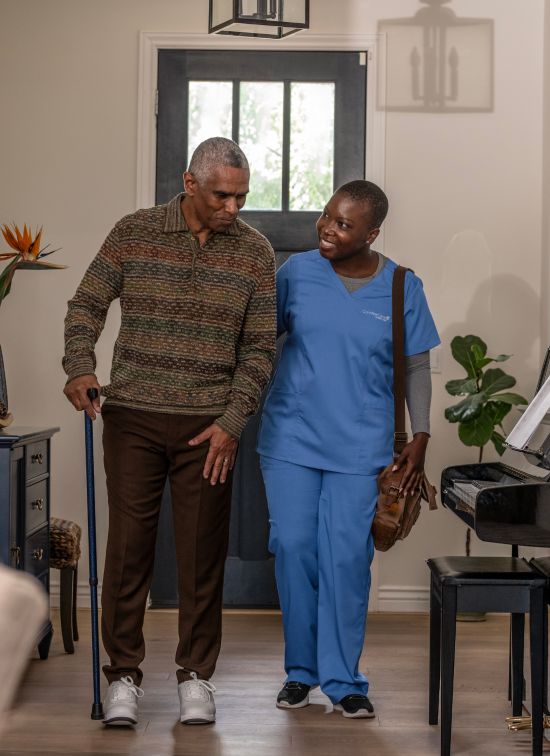
A home-safety check can be more useful when it considers how the person actually moves through the home.
Walk through frequently used areas at different times of day. Daylight may hide a problem that becomes obvious at night.
Look for:
Think about function rather than simply appearance.
Can the person safely get from the bed to the bathroom at night? Can they turn on a light before entering a dark hallway? Are commonly used items within comfortable reach?
Changes should also be made with the older adult’s permission whenever possible. Familiar surroundings can be especially important for someone experiencing cognitive changes and sudden rearrangement may create confusion or frustration.
When concerns are more complex, an individualized home-safety assessment from an appropriate healthcare or rehabilitation professional may be helpful.
Even a good fall-prevention recommendation may not help if no one has a plan for putting it into practice.
Ask:
Who will replace the light bulb?
Who will help schedule the vision appointment?
Who can accompany a walk?
Who will follow up on a healthcare referral?
Writing down the next step and who will handle it, can turn a general recommendation into something practical.
Fall prevention does not have to begin with a major overhaul of the home or daily routine.
Try asking:
“What is one place or activity at home where you would like to feel more confident?”
The answer can help identify a meaningful first step.
Fall prevention is most effective when it becomes an ongoing, person-centered process, one that supports safety while preserving independence and quality of life.
If you have concerns about fall risk, new symptoms, medication side effects, or appropriate exercise, speak with a physician, pharmacist, physical therapist, occupational therapist, or another qualified healthcare professional.
For older adults and families in North San Diego County, additional support at home can make everyday routines feel safer and more manageable. ComForCare Home Care North San Diego provides personalized non-medical home care focused on companionship, daily assistance, safety and quality of life.
Call (858) 247-1005 to learn more about personalized home care in North San Diego County.
Learn More About ComForCare Resources
Sources

Each office is independently owned and operated and is an equal opportunity employer.

© 2026 ComForCare Franchise Systems, LLC.