
Get Started!

| Quick Answer: Palliative care is comprehensive care for people battling a serious illness. They need emotional and mental support alongside medical treatment, and that’s what professional palliative care provides. It is often confused with hospice care, which is an entirely different term. |
So, what is palliative care for seniors? It is specialized care designed to improve quality of life for someone living with a serious illness. It addresses symptoms and discomfort while helping patients and families understand care options and coordinate support.
It is appropriate for someone living with cancer, heart failure, dementia, Parkinson’s disease, respiratory diseases, etc. Palliative care can begin at any stage of illness and doesn’t necessarily mean someone is nearing the end of life.
The medical palliative care team can include physicians, nurses, social workers, and other professionals who work together around the individual’s needs and goals.
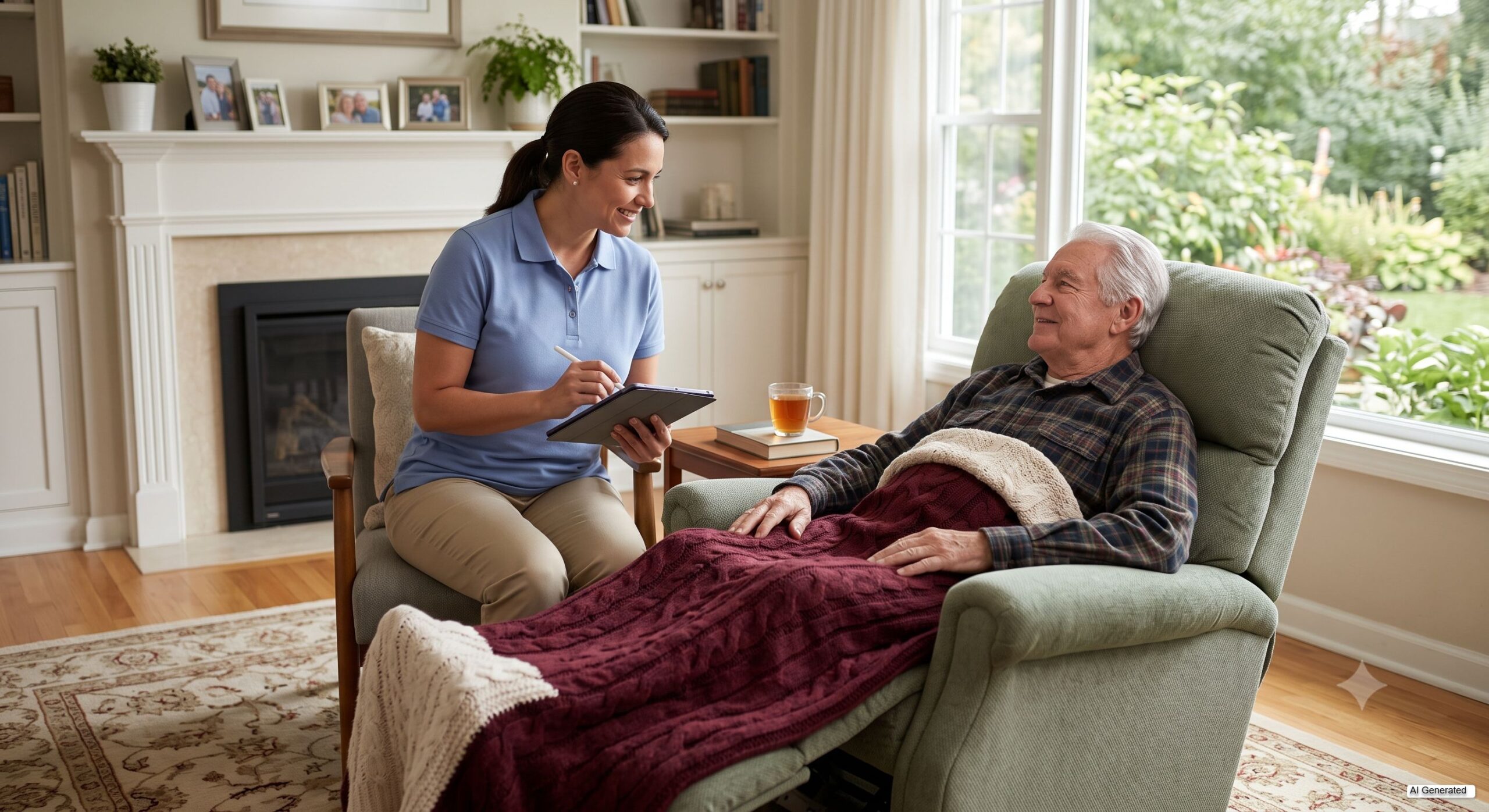
It allows eligible individuals to get the required care without having to travel to medical facilities all the time. Care plans are designed based on the patient’s condition, treatment plan, insurance, and other factors.
Medical palliative care focuses on symptom management, communication about treatment goals, and coordinating medical services.
Alongside medical support, families need help with everyday activities at home. A non-medical caregiver can provide practical assistance that makes daily life more manageable, from medication reminders to personal care support.
Home palliative care services can include the following:
These services do not replace medical palliative care. Instead, they help address the everyday needs that accompany serious illness.
The two terms are often used interchangeably, but they are different.
Palliative care is additional care designed to make everyday life easier for both the patient and their family. It can begin at any stage of the disease while medical treatment continues.
Hospice, on the other hand, focuses on comfort and quality of life when a person is approaching the end of life. For Medicare hospice coverage, a doctor and hospice medical director must certify that the person is terminally ill with a life expectancy of six months or less if the illness follows its expected course, among other requirements.
The two approaches share an emphasis on comfort and quality of life, but they are not interchangeable.
Here are several benefits of in-home palliative care when medical and non-medical support work together:
Remaining in familiar surroundings makes daily routines feel less disruptive. A caregiver assists with everyday needs while the medical team manages the person’s clinical care.
Family members often juggle caregiving responsibilities, jobs, and household chores. Professional assistance provides the relief they need while allowing them to stay involved in important decisions.
A consistent caregiver becomes familiar with a person’s preferences, routines, and communication style. This familiarity can be especially valuable when someone is dealing with a serious or progressive condition, and it is central to our patient-centered care approach.
Simple tasks become difficult during illness. Assistance with meals, personal care, mobility, and household routines helps preserve dignity and comfort.
| Expert Insight “Families often think palliative care means giving up, and that is simply not true. What I tell families is that palliative care is about living as well as possible for as long as possible. Our non-medical caregivers work alongside the medical team, not instead of it, so the person gets both clinical support and the everyday help that actually makes each day feel manageable.” — Dr. Akanksha Bist, PT, DPT, Owner of ComForCare North Austin |
Non-medical palliative support at home refers to practical assistance that complements medical care.
They help with daily tasks such as dressing, grooming, preparing lunch, and keeping the home organized.
It’s important to understand the distinction. Non-medical caregivers do not diagnose conditions or change medications, but offer daily support.
When you need palliative care at home, you must understand the needs before you commence care. While in-home family caregivers offer invaluable support, there comes a time when professional support becomes essential.
At ComForCare Home Care, we aim to provide the support both patients and their families need. Family caregivers get the flexibility they need, while patients receive professional support to stay safe, comfortable, and relaxed in the comfort of their homes.
You can discuss your specific medical needs with our team, and we will create a customized care plan as per the required clinical services.
What Families Say
| “When my Uncle came home after a long hospital stay, we were overwhelmed trying to manage his care. ComForCare truly came to our rescue. The caregivers they provided were not only compassionate but incredibly well-trained, they knew exactly how to handle his medication schedule and mobility exercises.” — Mehul, via Google Reviews |
Palliative care is about more than managing diagnosis. It is about supporting comfort, quality of life, personal goals, and the people providing care.
For families in North Austin, combining medical palliative care with dependable non-medical home support makes everyday life more manageable, and that’s why ComForCare Home Care services offer everything your loved ones might need. Our trained caregivers understand your needs and offer the support you need to improve your loved ones’ quality of life.
What is palliative care for seniors?
Palliative care is specialized supportive care for people living with serious illnesses. It focuses on symptom management, quality of life, care coordination, and helping patients and families make informed care decisions.
Can palliative care be provided at home?
Yes. Palliative care can be provided in a person’s home as well as other healthcare settings. The specific services available depend on the person’s needs and care plan.
What is the difference between palliative care and hospice care?
The key distinction between the two is timing and purpose. Palliative care accompanies treatment for a serious illness at different stages, while hospice focuses on comfort when someone is approaching the end of life.
What can non-medical palliative support at home include?
It includes companionship, meal preparation, personal care, mobility assistance, light housekeeping, medication reminders, and respite for family caregivers. These services complement medical care rather than replacing it.
What are the benefits of in-home palliative care?
The benefits include greater comfort in familiar surroundings, practical help with daily activities, stronger support for family caregivers, and better coordination between the person’s different care needs.

Each office is independently owned and operated and is an equal opportunity employer.

© 2026 ComForCare Franchise Systems, LLC.