
Get Started!

| Quick Answer: Care for a loved one starts with understanding their needs and what the disease demands. People with Alzheimer’s disease need a safe home environment, patient communication, managing behavioral changes, and identifying when they need professional caregiving support. |
Alzheimer’s is a cruel disease and treats every person differently. Some people slowly lose their memories, while others’ health declines faster than they expect. Most people, when looking for Alzheimer’s care, believe that their loved ones need personal assistance and continuous monitoring.
It’s the wrong approach to care. You must not assume what your loved ones can and can’t do. Are they having trouble preparing meals, or is their personal hygiene difficult for them to manage all alone?
Observe their routines, understand their needs, and read this blog to learn more about at-home Alzheimer’s care.
A consistent routine is the first requirement for Alzheimer’s patients. They need a predictable routine to do activities at about the same time each day, reducing uncertainty and providing reassurance.
Establish regular timing for:
Flexibility is still important. If your loved one becomes tired or frustrated, adjust the activity rather than forcing them to follow a schedule rigidly.
As Alzheimer’s progresses, changes in memory and judgment create safety concerns. A home assessment is crucial to identify risk areas and make required changes around the house before they cause any serious problems.
Here are the following things you can take care of:
The goal is not to make the home feel restrictive. Instead, the modifications make the home environment feel safer. Our GAITWay fall prevention program can help identify these fall risks before they cause an accident.
Alzheimer’s can make it difficult for a person to find the right words, understand complex instructions, or remember recent conversations. Communication should therefore be simple, calm, and respectful.
Use short sentences and give your loved one enough time to respond. Instead of asking several questions at once, focus on one idea at a time.
If they remember an event incorrectly, avoid repeated corrections. A reassuring response is more helpful than trying to prove that their memory is inaccurate.
| Expert Insight “The families who do best are the ones who stop trying to correct the disease and start working with it. I tell families in Williamson County the same thing every time: a calm, predictable day does more for someone with Alzheimer’s than any argument about what is or isn’t true. That is the entire philosophy behind our DementiaWise training.” — Dr. Akanksha Bist, PT, DPT, Owner of ComForCare North Austin |
Activities provide structure and a sense of purpose. The best activities are familiar, enjoyable, and appropriate for the person’s current abilities.
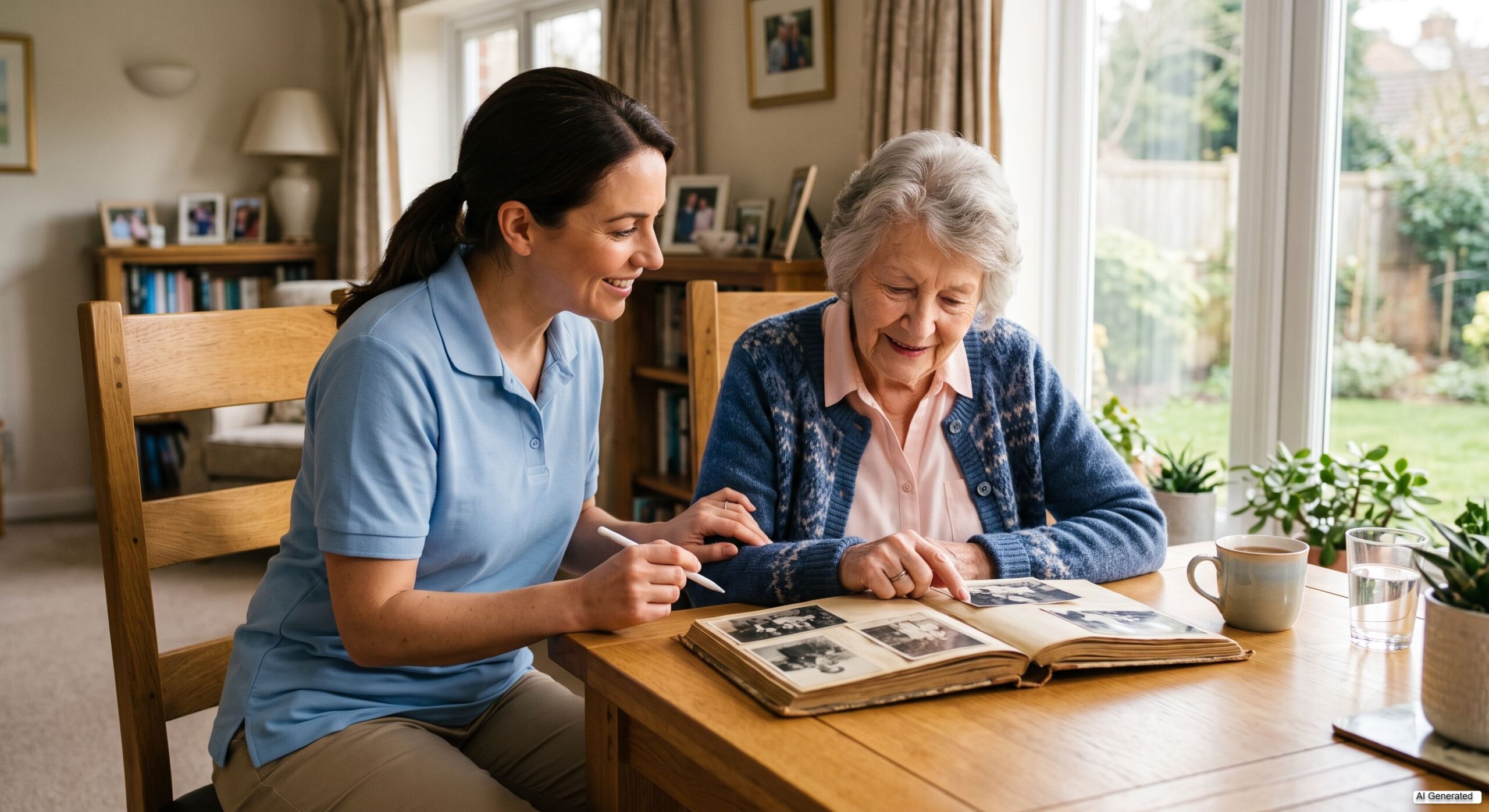
Listening to favorite music, looking through photographs, gardening, preparing a simple snack, folding laundry, or taking a short walk can all create opportunities for engagement, the same idea behind our Joyful Memories program.
The goal isn’t productivity or perfection. Meaningful activities provide connection and help your loved one feel involved in everyday life.
Changes in mood or behavior are common in people with Alzheimer’s disease. Agitation, anxiety, repetitive questions, or resistance to care occur when they feel tired, anxious, or frustrated.
At these times, try to calm them gently and learn what triggered them. It can be anything, such as hunger, pain, dehydration, poor sleep, unfamiliar surroundings, loud noise, etc.
Try to turn their attention towards another activity that they enjoy.
While family caregiving can be invaluable, there comes a time when it isn’t enough. As the disease progresses, your loved ones require more supervision, which one person can’t provide.
That’s where Alzheimer’s home care becomes necessary. Professional caregivers provide the assistance your loved ones need, including meal preparation, personal assistance, mobility support, daily routines, transportation to medical appointments, and more.
Dementia home care allows family caregivers to take care of themselves and the rest of the family, while professionals take care of their loved ones with Alzheimer’s. Our respite care also gives family caregivers real time to rest along the way.
Alzheimer’s care isn’t easy, especially for family caregivers who face new challenges as the disease progresses. They need patience, compassionate communication, and external support to provide their loved ones with the right amount of care.
For Williamson County families, ComForCare Home Care offers complete, specialized Alzheimer’s home care. We understand that everyone has different needs, so we offer a customized care plan that best suits your loved ones’ needs. Our plans are flexible, so you don’t need to worry as care needs change.
What Families Say
| “This is the absolute best service for people who need home care. They are professional, knowledgeable and detail oriented. They are warm and compassionate. Dr Bist is a life saver. She truly cares for her patients makes sure they are comfortable and well cared for.” — Tanvi P., via Google Reviews |
What is the best way to provide Alzheimer’s care at home?
It requires establishing familiar routines, creating a safe home environment, communicating patiently, and getting professional caregivers when the time is right.
Can someone with Alzheimer’s continue aging in place?
Yes. Aging in place in Williamson County is possible when the person’s home is safe, and they have appropriate family and professional support. Care needs should be evaluated regularly as Alzheimer’s progresses.
What does dementia home care include?
Dementia home care includes assistance with personal care, meals, mobility, companionship, medication reminders, daily routines, and supervision. At ComForCare, services are tailored to an individual’s needs.
How much does in-home dementia care cost?
The costs vary depending on factors such as the number of hours needed, level of care, scheduling, and provider. A personalized care assessment is required to identify the services needed to get an accurate estimate.
Families should consider specialized home care when a loved one needs increasing assistance with personal care, daily activities, safety, supervision, or companionship and family caregivers cannot provide all the required support alone.

Each office is independently owned and operated and is an equal opportunity employer.

© 2026 ComForCare Franchise Systems, LLC.