
Get Started!

| Quick Answer: Digestive problems in seniors, like constipation, nausea, reflux, and dry heaving, often come down to hydration, regular meals, medications, and activity levels. In-home caregivers help by preparing suitable meals, encouraging fluids, keeping a consistent routine, and noticing changes early, then passing those concerns to the healthcare provider. They support medical care but never replace it. |
Do you know that 70% of the body’s immune system resides in the gut? Most people believe drinking and eating healthy is enough, but if your digestive health isn’t right, it affects your mood, nutrition, energy, mobility, and medication routines.
Especially in advanced age, digestive health becomes extremely important because motility slows down and loved ones may experience nausea, vomiting, or dry heaving.
Proper nutrition, diet, hydration, and timely medication can help. In-home caregivers can also help.
This blog discusses how in-home care helps in maintaining digestive health in seniors.
Seniors can experience many digestive health problems. Some people have constant constipation, while others experience acidity. Dry heaving in the elderly is also quite common. These symptoms may be linked to diet changes, inadequate fluid intake, reduced physical activity, medications, or certain health conditions.
Other digestive concerns are:
Any change in eating patterns and bowel habits is important.
Nausea and retching without vomiting can result from gastrointestinal infections, reflux, certain medications, food-related illness, dehydration, and other medical problems.
A symptom doesn’t signify a particular problem. Observe when the problem occurs.
Does nausea appear after meals? Does it coincide with a new medication? Is the person also experiencing abdominal pain, constipation, diarrhea, fever, dizziness, or reduced urination?
Communicate any changes to the healthcare provider for the right diagnosis.
| Expert insight “When a family tells me their parent has been ‘off’ lately, the first things I ask about are fluids and meals. In my experience, a lot of digestive trouble in seniors starts with simple things, not drinking enough, skipping meals, or a medication change nobody connected to the symptoms. A caregiver who’s in the home every day is often the first person to notice that pattern.” Akanksha Bist, PT, DPT, Owner of ComForCare North Austin |
Managing nausea and digestion in seniors is possible by creating a proper diet plan and making any dietary or medication changes recommended by physicians.
If nausea makes meals difficult, smaller meals may be easier to tolerate than large portions. Strong food odors can also worsen nausea for some people.
Refrain from making any major dietary changes or introducing new medications, especially for nausea or constipation, without medical guidance. Caregivers can help by giving medication reminders exactly as prescribed.
Everyday habits that support digestive wellness are:
For people with specific diet plans, these habits should complement the existing routine.
Hydration, not just meals, plays a major role in digestive health. Nausea can cause water aversion, and vomiting and diarrhea cause fluid loss. This leads to dehydration. Also, seniors have a reduced sense of thirst.
Caregiver responsibilities include monitoring water intake, keeping appropriate beverages within reach, and offering them fluids regularly to avoid dehydration. They should also monitor for dark urine, reduced urination, unusual weakness, dizziness, or confusion, as these are symptoms of dehydration.
Preparing meals becomes challenging due to weakness, dizziness, and mobility issues in advanced age. The lack of nutritious meals becomes visible if seniors skip meals for extended periods.
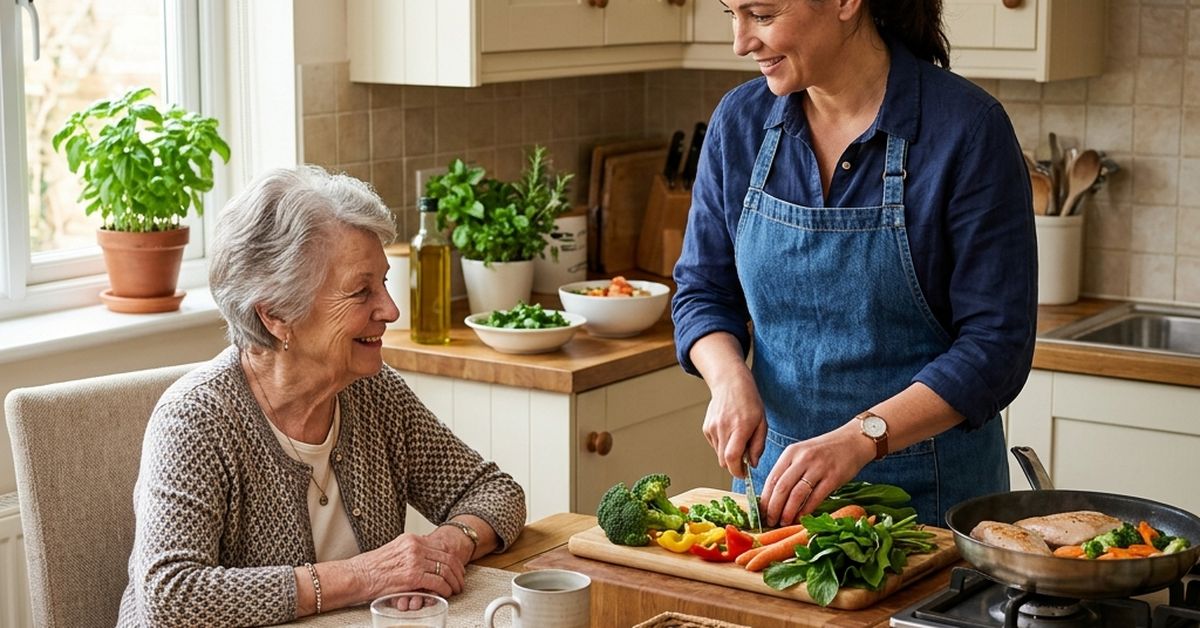
That’s why home meal prep and nutrition for seniors often fall to caregivers. They assist with grocery shopping, meal planning, preparation, and even companionship during meals to ensure proper nutrition. This often goes hand in hand with light housekeeping, so the kitchen stays clean and safe to cook in.
Meal preparation is also about consistency. Having meals available at predictable times helps seniors maintain a regular eating routine rather than skipping meals because cooking has become too difficult.
Caregivers should notice signs such as constant constipation, nausea, vomiting, blood, fever, weakness, dehydration, abdominal pain, and inability to keep fluids down. Report these concerns to a healthcare provider as soon as possible, as underlying conditions can cause these symptoms.
Caregivers can observe and report these symptoms, but they cannot diagnose medical conditions.
In-home care is generally associated with personal care and support, but it also includes meal preparation and help with maintaining digestive health.
They create a consistent day-to-day routine for seniors, helps with meal preparation and mobility, and communicates changes in health. This type of care complements medical care while helping a loved one remain comfortable and supported in familiar surroundings.
Digestive wellness is closely connected to everyday life. What someone eats, how much they drink, how active they are, and whether they can manage personal care comfortably can all affect their overall well-being.
At ComForCare, we provide meal preparation as part of care plans whenever required. If your loved one has digestive issues and you want to ensure proper nutrition and better digestive health, we can create a care plan that includes paying attention to changes early, preparing suitable meals, supporting hydration, and seeking medical advice when symptoms persist. Our team is led by Akanksha Bist, PT, DPT, who brings over 15 years of clinical experience to every care plan.
| “ComForCare goes beyond basic sitter services. Dr. A brings so much knowledge and compassion to the care plan, and it really shows. Thankyou for all the help ComForcare!” — Ankit P., via Google Reviews |
Contact us today or call (512) 957-0006 to learn more!
Que: What are some common digestive problems in older adults?
Ans: Constipation, nausea, vomiting, diarrhea, reflux, bloating, reduced appetite, and difficulty swallowing are some common signs.
Que: What can cause dry heaving in an older adult?
Ans: Dry heaving can have several possible causes, including nausea, reflux, infections, medications, dehydration, and other medical conditions. Repeated or severe dry heaving should be reported to a healthcare provider.
Que: How can caregivers help with nausea at home?
Ans: Caregivers help maintain a calm environment, offer appropriate fluids as directed, assist with smaller meals when suitable, and monitor symptoms.
Que: Can in-home meal preparation help improve nutrition?
Ans: Yes. Meal preparation assistance makes it easier to maintain regular meals and follow an established dietary plan. Caregivers also notice changes in appetite or eating habits and communicate concerns to family members.
Que: What does personal care assistance include?
Ans: It includes assistance with bathing, grooming, dressing, toileting, mobility, and other everyday activities. It can be particularly helpful when digestive problems or other health concerns make daily tasks more difficult.

Each office is independently owned and operated and is an equal opportunity employer.

© 2026 ComForCare Franchise Systems, LLC.