
Get Started!

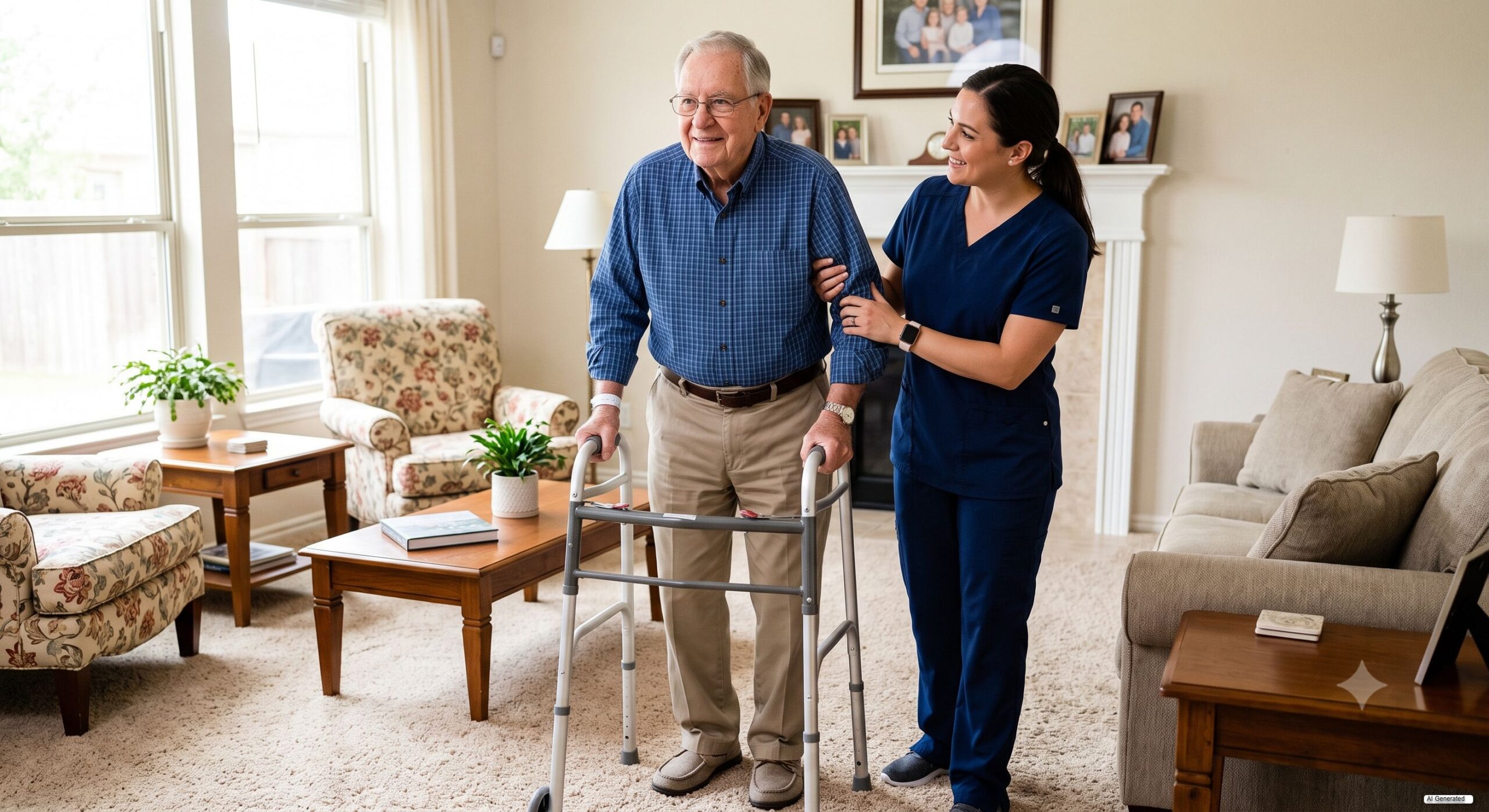
The surgery went well and the hospital did its job. Then comes the moment that catches most Round Rock families off guard: discharge day. Suddenly the nurses and call buttons are gone, and a senior who can barely stand is home with a list of medications, a walker, and a family that has never done this before. The first weeks at home decide how the whole recovery goes.
This blog discusses how home care after surgery keeps Round Rock seniors safely on track.
The key highlights of the blog are:
“Mom is being discharged Friday. Now what?”
Whether your parent is leaving St. David’s Round Rock, Ascension Seton Williamson, or an in-patient rehab facility, the risks follow the same pattern: falls on weakened legs, missed or doubled medications, skipped meals, infection signs nobody notices, and doing too much too soon. Any one of these can undo a successful surgery.
This blog will help you plan a safe senior recovery at home after surgery.
Hospitals and surgeons handle the operation; families inherit the recovery. The fix is not complicated, it is consistency: a trained set of eyes and hands in the home every day, exactly when the hospital’s support ends. A caregiver arranged through a transition of care plan can be in place from the moment your loved one walks back through their front door.
Preparing the home before your loved one arrives makes the first week dramatically safer.
Before discharge day:
These are simple steps, but they remove the most common hazards before they can cause a setback.
Hip and knee replacements, heart procedures, and spine surgeries are everyday events in the Round Rock area, and each brings its own recovery rules. Home care after hip replacement, for example, means respecting hip precautions during every transfer, every trip to the bathroom, and every shower, the exact moments when families feel least equipped to help.
Here is how the recovery timeline typically unfolds, and where home care fits:
| Recovery Phase | Biggest Risks | How Home Care Helps |
|---|---|---|
| First 72 hours | Falls, medication confusion, overexertion | Constant supervision, safe transfers, medication schedule managed from hour one |
| Weeks 1–2 | Infection signs, poor nutrition, skipped follow-ups | Watching the surgical site, protein-rich meals, rides to follow-up visits |
| Weeks 3–6 | Doing too much too soon, deconditioning, isolation | Encouraging safe activity, supporting therapy homework, companionship |
Most post-surgical readmissions trace back to a handful of preventable problems.
A trained caregiver helps prevent complications after surgery by:
Expert insight from Dr. Akanksha Bist, PT, DPT, Owner of ComForCare North Austin: “As a physical therapist, I have seen more recoveries fail at home than in the operating room. The surgery is the easy part; the hard part is the next six weeks of moving safely, taking medications correctly, and not overdoing it on a good day. When our caregivers are there from discharge day one, seniors recover faster and families sleep again.”
Many seniors go from hospital to in-patient rehab before coming home, and that second transition is just as risky as the first. Post-rehab care in North Austin picks up where the facility leaves off: continuing exercise routines, keeping therapy gains from slipping, and easing the jump from round-the-clock staff to an empty house.
For seniors who need supervision through the night in those early weeks, 24-hour home care with awake caregivers bridges the gap safely.
“When my uncle came home after a long hospital stay, we were overwhelmed trying to manage his care. ComForCare came to our rescue. The caregivers were compassionate and incredibly well-trained, and they knew exactly how to handle his medication schedule and mobility exercises. My uncle is now much more comfortable at home and improving every day.”
— Mehul
“I can’t thank Akanksha enough for her wisdom and guidance during my mom’s recent hospitalization, in-patient rehab, and transition home. She is so knowledgeable and well connected in the elder care community across the North Austin area.”
— Dawn O.
A good recovery is built in the first weeks at home, and your family does not have to build it alone. From preparing the home before discharge to daily support through the final weeks of healing, recovery care for seniors in Round Rock keeps your loved one safe, comfortable, and moving forward.
If your parent has a surgery date or a discharge date on the calendar, the best time to arrange care is before they come home.
Give us a call today to schedule a free in-home visit before discharge day!
How soon can home care start after surgery in Round Rock?
Often the same day as discharge. Call us when you have a discharge date from St. David’s Round Rock or Ascension Seton Williamson, and we will have care in place before your loved one gets home.
What does post-surgery home care include?
Safe transfers and mobility help, medication reminders, meal preparation, bathing and dressing assistance, rides to follow-up appointments, and a trained eye watching for complications.
How long do seniors need help after a hip replacement?
Every recovery is different, but most families use daily support for the first two to six weeks, then taper hours as strength returns. Care flexes up or down as your loved one progresses.
Does Medicare pay for this kind of care?
Medicare may cover short-term skilled home health a doctor orders, but not the day-to-day non-medical support most recoveries depend on. Long-term care insurance and private pay are the common routes, and we help with the paperwork.
Can you give family caregivers a break during a long recovery?
Yes. Our respite care steps in for a few hours or a few days, so the family members carrying the recovery can rest and come back recharged.

Each office is independently owned and operated and is an equal opportunity employer.

© 2026 ComForCare Franchise Systems, LLC.