
Get Started!

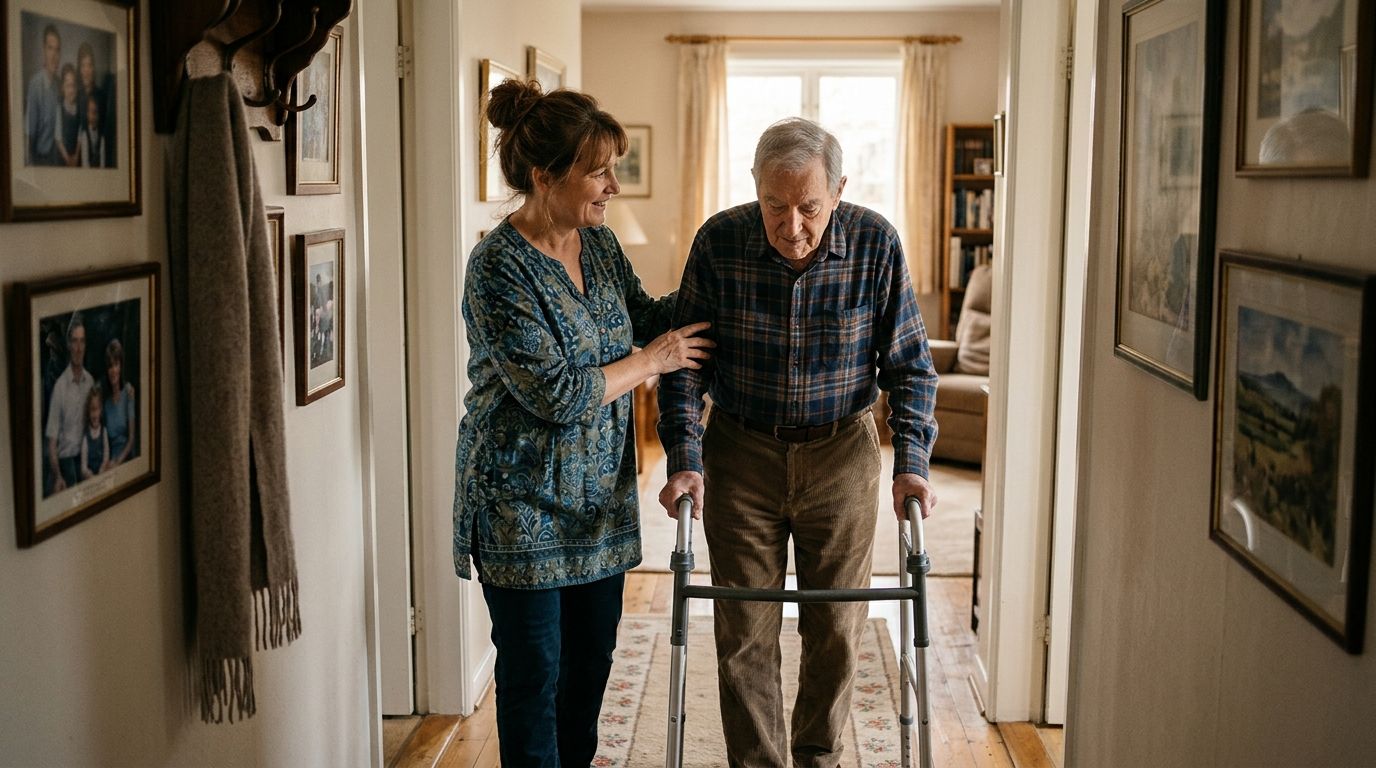
Parkinson’s is a progressive neurodegenerative disease that affects not just movement but also sleep, mood, communication, and the ability to manage everyday activities. Symptoms worsen over time, and by the time most people notice them, they’ve already affected 60-80% of bodily functions.
A Parkinson’s diagnosis doesn’t mean that a person loses independence. With Parkinson’s home care, a person can continue to live safely and independently. Family members and caregivers can provide the support needed to ensure safety and comfort.
This blog discusses Parkinson’s home care in detail and how it supports people at every stage.
There are generally five stages of Parkinson’s disease, but the symptoms and progression vary from person to person.
First stage: Symptoms are mild and affect one side of the body. A person might experience tremors, stiffness, or subtle changes in walking while remaining largely independent.
Second Stage: Symptoms start affecting both sides of the body, and daily activities take longer than usual.
Middle stage: Loss of balance becomes common. Assistance with dressing, bathing, transportation, or household activities is required.
Fourth Stage: Mobility and self-care become significantly more challenging. Living alone becomes a safety risk.
Fifth Stage: Standing and walking become impossible without help. Full-time, around-the-clock assistance is required.
As these stages progress, a person requires more and more assistance. The progression timeline also varies.
Here are some tips that can help you provide support at every stage of Parkinson’s disease:
Effective Parkinson’s care begins with recognizing which tasks have become difficult and what assistance would make them safer.
In the early stages, occasional help with transportation, errands, meal preparation, or household tasks is often sufficient. As symptoms progress, they may need help with bathing, dressing, grooming, or moving around the home.
Don’t rush the person. Allow them extra time for everyday activities. Encourage them to complete tasks independently when it is safe.
Changes in balance, posture, and walking can increase fall risk. So, focus on home safety as part of Parkinson’s support, an ongoing effort to ensure safety.
Start by removing loose rugs, clearing walkways, securing electrical cords, and improving lighting. Install appropriate grab bars and handrails where needed, particularly around bathrooms and stairs. Stable chairs with armrests also make it easier to sit down and stand up.
Consult a professional for a room-by-room assessment to make necessary changes.
Parkinson’s medication schedules are important to symptom management. Families and caregivers should follow the prescribed plan, use reminders when appropriate, and report concerns about side effects or changing symptoms to the healthcare team.
People with Parkinson’s need proper hydration and nutrition. Ensure regular meals, accessible drinks, and foods suited to the person’s needs. If swallowing becomes difficult, consult a healthcare professional rather than changing food textures without guidance.
Encourage movement within the person’s abilities. Walking, stretching, balance work, and strength exercises are beneficial, but activities should be matched to the individual’s condition and fall risk.
Parkinson’s also involves non-motor symptoms, including anxiety, depression, sleep disturbances, and cognitive changes. Some people develop dementia, which can affect memory, judgment, attention, and daily functioning.
You can help by maintaining predictable routines, giving clear instructions, reducing unnecessary distractions, and responding calmly when confusion occurs. If a person becomes unusually withdrawn, agitated, confused, or forgetful, discuss the changes with the healthcare provider. Often, sudden confusion is caused by factors other than Parkinson’s progression. So, watch for the signs of any sudden behavioral changes.
Parkinson’s is not only hard on the person with the disease, but also on the family members, especially the ones handling caregiving responsibilities. They need to juggle work, household, and other responsibilities alongside caregiving, which takes a toll on their physical and mental health.
This can require professional in-home care that provides companionship, personal care, meal preparation, medication reminders, transportation, mobility assistance, and respite for family caregivers.
Home care might not be sufficient if a person requires continuous skilled medical supervision, has repeated serious falls, or cannot be kept safe with available support. In those cases, consult the healthcare team to determine whether additional support or a different care setting is needed.
Parkinson’s progresses over time and affects every patient differently. The best care plan is one that understands the stages of the disease and includes services that support daily needs, ensures home safety, and can be changed over time.
That’s why you need ComForCare Home Care Services, where we offer tailored plans for every person and help patients stay independent at home.
Call us for more details!
Q. How to help someone with Parkinson’s?
A. Help can be offered through assistance with daily activities while encouraging independence wherever possible. Follow prescribed medication routines, keep the home safe, support appropriate movement, and monitor symptoms.
Q. What exercises are suitable for Parkinson’s patients?
A. Depending on individual abilities, a therapist can recommend walking, stretching, strength training, balance exercises, or other physical activities. A physical therapist can tailor an exercise plan to the person’s mobility, health, and fall risk.
Q. How to care for someone with Parkinson’s dementia?
A. Maintain a predictable routine, use simple communication, reduce distractions, and provide supervision suited to the person’s needs. Report cognitive or behavioral changes to a healthcare provider, especially if they appear suddenly or worsen rapidly.
Q. Can Parkinson’s patients be cared for at home?
A. Yes, many people with Parkinson’s can receive care at home. An arrangement can be made to assess their mobility, cognition, personal care needs, home safety, and available support.
Q. When should someone with Parkinson’s go into care?
A. When family members and home care services aren’t enough to support a safe and comfortable lifestyle, a residential facility is a viable choice.

Each office is independently owned and operated and is an equal opportunity employer.
© 2026 ComForCare Franchise Systems, LLC.