
Get Started!

| Quick answer: The best activities for dementia patients during the holidays are simple, familiar, and short: favorite music, easy decorating, family photos, small cooking tasks, and gentle sensory activities. Keep gatherings small, protect the daily routine, and offer a quiet place to rest. |
The holiday is a time for fun, enjoyment, and connecting with family members. However, for dementia patients, busy gatherings, unfamiliar routines, and too much stimulation can cause confusion and distress. The key is to keep having fun while making the person with dementia feel familiar and comfortable.
At this time, you can engage them in fun, meaningful activities. It can be as simple as listening to favorite music, arranging and making decorations, or looking through family photographs.
This blog has discussed activities for dementia patients in detail and how to make the holiday season enjoyable for dementia patients.
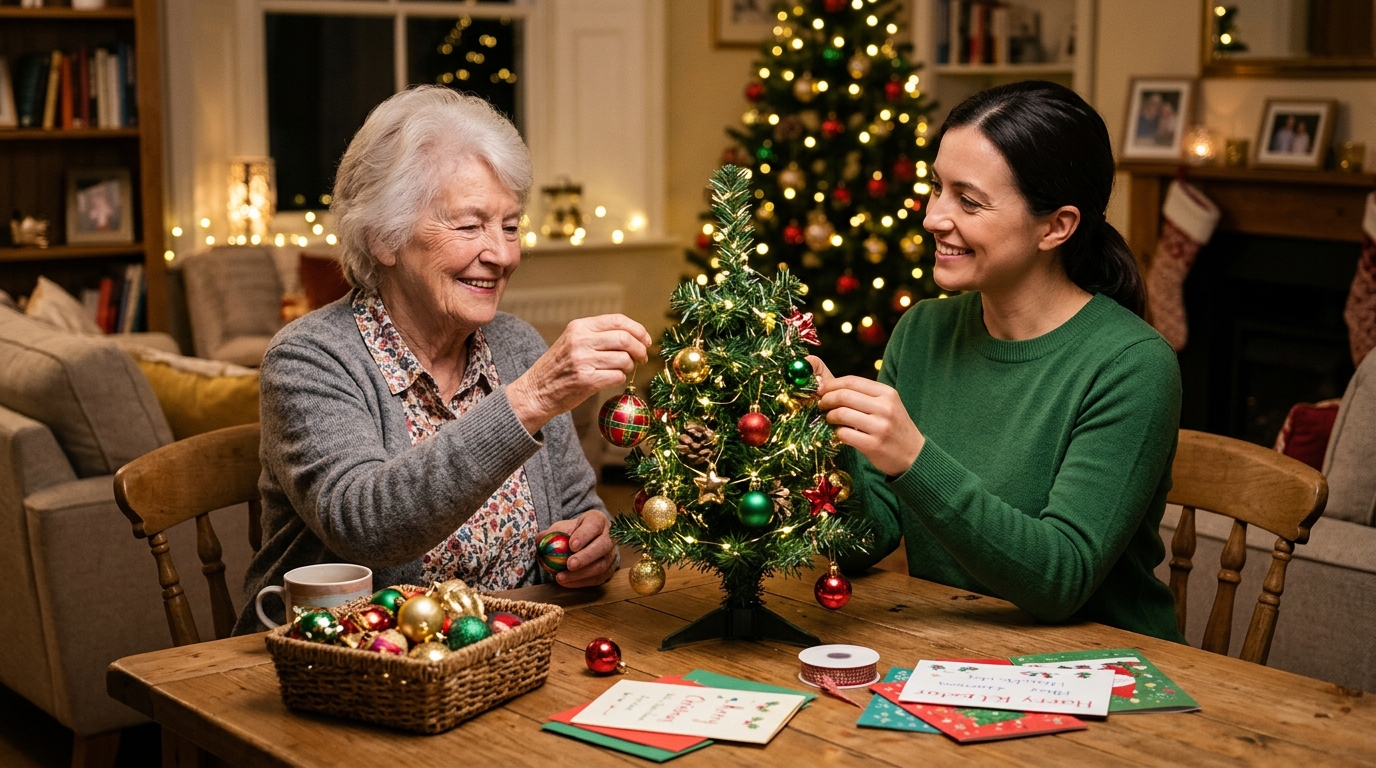
Decorating can help a loved one join seasonal traditions without managing complicated tasks. Choose activities that match their current abilities and interests.
You can try the following:
Ensure that the supplies used are safe for them to use and can’t be mistaken for food. To reduce confusion, offer one task at a time and let them do it at their own pace. The goal is for them to enjoy it without pressure.
Music can be a comforting way to spend time together, especially when conversation becomes difficult. Play familiar holiday songs, sing together, or listen to music that has been part of your loved one’s traditions for years.
You can also look through family photographs, old greeting cards, or pictures from previous celebrations. Invite your loved one to share thoughts if they wish. Avoid repeatedly testing their memory or insisting they identify people and dates correctly.
Watching a favorite movie with loved ones is also a good idea. Reading a seasonal story can also be a fun group activity. These activities for Alzheimer’s patients have proven to be useful but should be matched with a person’s preferences.
Preparing food with family members is a familiar, purposeful activity, especially for people who used to love cooking or had favorite recipes. Depending on their abilities, they can stir a bowl, wash fruit, arrange napkins, place cookies on a tray, or help set the table.
Choose a simple recipe the person recognizes and divide it into manageable steps. Keep hot surfaces, sharp utensils, raw ingredients, and appliances under appropriate supervision.
You do not need to prepare an entire holiday meal together. A short activity, such as decorating a few cookies or arranging fruit, can offer an opportunity to participate.
Sensory activities use familiar sights, sounds, textures, scents, or tastes to create an engaging experience. They are especially useful when a person finds conversation or more complex tasks difficult.
Here are some ideas:
Touch: Fold soft towels, handle fabric squares, or feel safe, textured materials.
Smell: Smell cinnamon sticks, oranges, or familiar seasonal herbs if the person finds these scents pleasant.
Sound: Listen to seasonal music, bells, or calming nature sounds at a comfortable volume.
Sight: Look at winter scenery, family photos, or simple holiday decorations.
Movement: Roll a soft ball, gently stretch, or arrange lightweight objects while seated.
Observe them because scents, textures, or sounds can sometimes be bothersome.
The holiday season means the family comes together. For people with dementia, it means more conversations and more stimulation that can cause confusion, anxiety, and distress. So, instead of a large gathering, consider shorter visits with a few familiar people.
Schedule visits for the time of day when your loved one is usually most comfortable. Ask visitors to speak calmly, approach from the front, and avoid asking several questions at once. If possible, try to maintain their daily routine.
Create a quiet area in the house where they can relax away from the activity. If they seem tired, you can ask them to take a break.
| Expert insight: Holiday activities work best when they are short and familiar. The ComForCare North Monmouth team often sees that ten or fifteen minutes of a favorite song, a simple craft, or old photos at the time of day your loved one feels best does more than a long, busy event. Keep an easy exit, such as a quiet room, ready in case things get overwhelming. |
Dementia requires daily practice and engagement in one form or another. Instead of making everything holiday-themed, keep doing the same activities you do every day, such as reading, watering plants, sorting greeting cards, matching socks, or arranging familiar household objects. A short walk like every day is also a good idea.
All of these activities involve your loved one’s participation and should be matched to their abilities, preferences, and hobbies.
| “Excellent service from ComForCare. Our caregiver was precise and knowledgeable, and the entire staff was easily reachable and incredibly helpful. It’s amazing that they pick up any time of day no matter when you call them. Denise, an owner, was especially was lovely to work with!” — Dn Gl, verified client review |
During holidays, family members have even more responsibilities, like shopping, wrapping gifts, deciding menus, sending invites, and more. During this time, taking care of a loved one with dementia and maintaining their daily routine can be challenging. It can also affect family caregivers’ health.
Thus, you can arrange in-home dementia care in North Monmouth for holidays, where caregivers can assist your loved ones and help with dementia activities to keep them engaged and happy. These trained professionals can engage them in dementia-friendly activities while monitoring for signs of agitation, fatigue, or confusion.
Holidays are a time to enjoy, and at ComForCare Home Care, we offer any help we can to make your holidays even more enjoyable,
Call us to learn more!
Q. Why are activities important for people with dementia?
A. Activities offer enjoyment, social interaction, and opportunities to use retained abilities. They also help reduce boredom.
Q. What sensory stimulation activities are good for seniors with dementia?
A. The activities can include listening to music, playing jigsaw puzzles, arranging photographs, taking a short walk, watching a favorite movie, etc. These activities should be matched with a person’s abilities and interests.
Q. How can you make an activity blanket for dementia patients?
A. Choose a sturdy fabric base and securely attach a few washable, textured fabric panels or large fabric loops. Avoid loose buttons, beads, long cords, small detachable parts, and anything that could pose a choking or entanglement risk.
Q. What are the four main types of activities for dementia?
A. There are cognitive, sensory, physical movement, and social or creative activities. You can combine one or more types of activities for your loved one.
Q. What are some Christmas activities for dementia patients?
A. You can consider listening to familiar Christmas songs, decorating an unbreakable tabletop tree, looking at family holiday photos, preparing a simple recipe, sorting greeting cards, or watching a favorite seasonal movie.

Each office is independently owned and operated and is an equal opportunity employer.
© 2026 ComForCare Franchise Systems, LLC.