
Get Started!

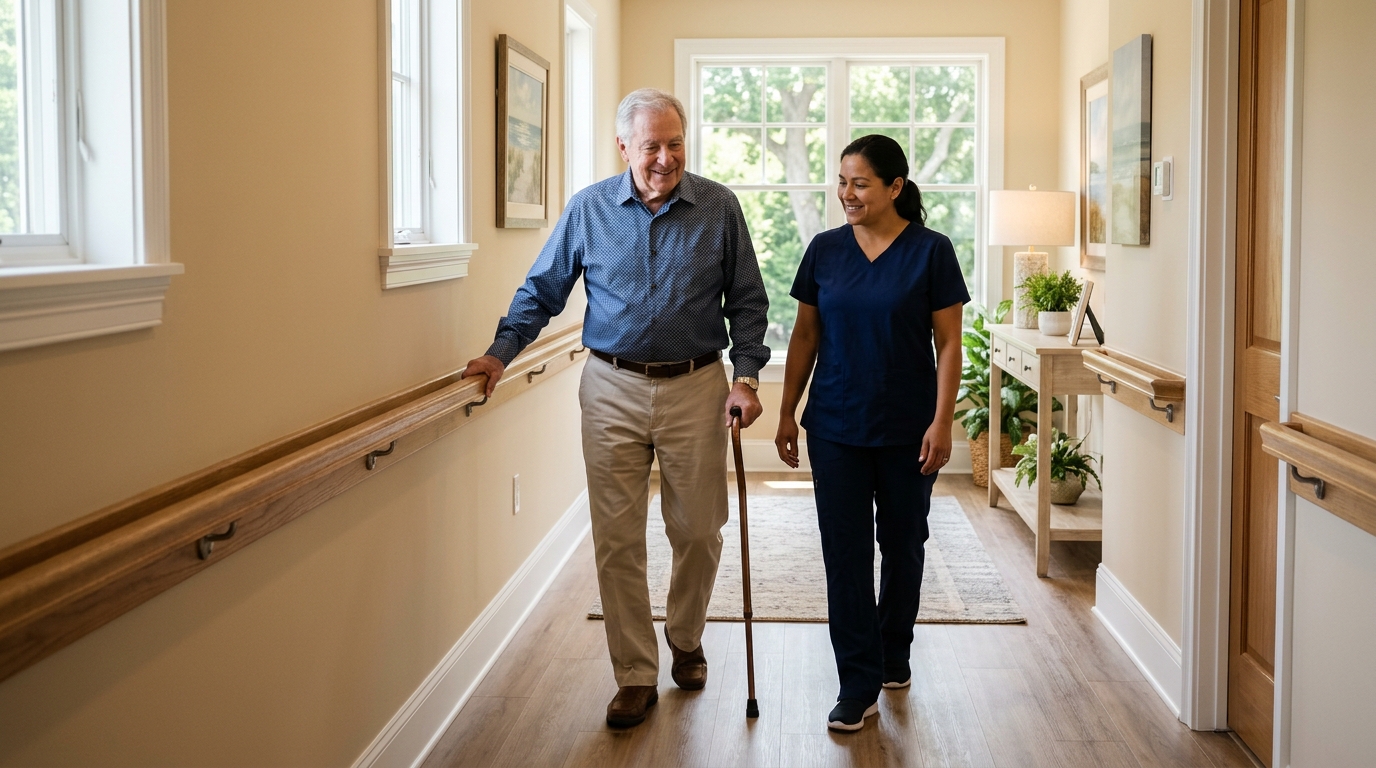
| Quick answer: Aging-in-place home modifications for seniors in Rumson, NJ focus on the bathroom, stairs and entryways, bedrooms and hallways, and the kitchen. Start with the fall hazards, such as grab bars, secure handrails, good lighting, and clear walkways, then add daily support from a caregiver as needs grow. |
If you have a senior loved one at home who is struggling to navigate safely, it’s time to consider aging-in-place home modifications. These changes involve improvements that boost accessibility, reduce everyday hazards, and help seniors keep using their homes safely.
This blog has discussed aging-in-place remodeling, including stair lifts for the elderly, and how they help.
Aging in place means staying in your own home and community as you grow older, rather than moving to a residential facility solely because your support needs have changed. It involves planning for future mobility, safety, accessibility, and assistance with daily activities.
It includes a professional home assessment to identify potential hazards and make changes based on individual needs. Consider future needs to plan carefully before concerns become urgent.
Bathrooms are slip-prone areas because of slippery surfaces, wet floors, raised tub edges, and limited space, making them risky for seniors with balance or mobility concerns.
Here are some bathroom modifications:
Identify the problem areas or consult a professional to do so for you.
With joint pain, weakness, balance problems, and reduced mobility, stairs soon become difficult to climb. Check whether existing handrails are secure and whether stairways have sufficient lighting.
Here are some improvements:
Consider a stair lift if seniors have severe mobility issues. The person should be able to transfer safely onto the seat, remain seated, and use the equipment.
Seniors spend most of their time in bedrooms and living areas, but hallways are also part of the home. Thus, these spaces should be modified to make everyday movement easier.
Here are some important changes:
The appropriate changes depend on the home’s existing design and your loved one’s current and anticipated needs.
| Expert insight: Many homes in Rumson and nearby towns are older or multi-story, with steep stairs, tall tubs, and tight bathrooms. The ComForCare North Monmouth team often sees that the best first step is a slow walk through the home with your parent, noting every spot where they pause, grab a wall, or slow down. Those spots show which changes should come first. |
The kitchen is another important area to assess. Reaching overhead cabinets, bending toward low shelves, handling heavy cookware, and using appliances become more difficult with age or physical limitations.
Here are some tips:
Not everyone needs extensive aging-in-place home remodeling. Sometimes, you only need a few necessary adjustments instead of a major overhaul.
Consult a professional to assess your house. They understand aging-related housing needs and can help design or modify your home to improve accessibility.
Even after home modifications, you can consult a therapist for recommendations on daily activities and assistive equipment.
Making changes around the house alone doesn’t eliminate the challenges of daily life. Some seniors might still need help with dressing, grooming, toileting, meals, transportation, housekeeping, and companionship. For personal assistance, consider personal care services in Rumson, NJ, that provide adequate support without taking away independence.
Consult a reliable home care agency that can create a customized care plan based on your loved one’s needs. This type of care helps seniors stay safe and comfortable in familiar surroundings instead of moving to a residential facility.
| “ComForCare is a wonderful agency. The whole staff was so knowledgeable and kind! Working with the intake coordinator, Denise, and the owner, Mike, was a pleasure, not to mention our wonderful caregiver!” — Robin P., via Google Reviews |
Most families make the mistake of stalling their modifications until a fall or accident occurs. The key to safe navigation around the house is to observe seniors and notice if they struggle with anything in particular. Identify potential hazards and fall risks beforehand, and consult a professional for a home assessment if needed.
ComForCare Home Care can help you identify these problem areas around the house and create a care plan for your loved ones. We understand their needs, preferences, struggles, and daily challenges to recommend changes around the house and create a care plan that helps them stay safe and comfortable.
Call us now for details!
Q. What does aging in place mean?
A. It means spending older age in familiar surroundings without having to move to a residential care facility. The support is provided at home to reduce fall risks and prevent other accidents.
Q. What is a Certified Aging-in-Place Specialist?
A. A Certified Aging-in-Place Specialist (CAPS) is a professional who has completed the National Association of Home Builders’ training program focused on housing modifications for aging-related needs. CAPS professionals help homeowners plan renovations that improve accessibility and usability.
Q. How can you make your home safe for aging in place?
A. The preliminary steps include reducing clutter, removing loose rugs, securing handrails, installing grab bars in the bathroom, improving lighting in hallways and stairways, etc.
Q. How do you find reliable caregivers for aging in place?
A. Ask about caregiver screening, training, supervision, scheduling, backup coverage, and how care plans are developed and updated. Check references and review the service agreement before deciding.
Q. What home modifications should be prioritized first?
A. Prioritize immediate safety concerns, particularly fall hazards, poorly lit stairs, unstable handrails, and unsafe bathroom surfaces.

Each office is independently owned and operated and is an equal opportunity employer.
© 2026 ComForCare Franchise Systems, LLC.