
Get Started!

| Quick Answer: Subtle signs an elderly parent needs in-home care include an empty or spoiled fridge, unopened mail, neglected hygiene, unexplained bruises, social withdrawal, and repeating questions. Noticing two or three of these red flags means it is time to explore flexible home care support to keep them safe and independent. |
Most families don’t get one clear moment that tells them it’s time for home care. Instead, it’s a slow accumulation of small things, noticed on a weekend visit, mentioned in passing on a phone call, or quietly explained away because nobody wants to believe it yet. Knowing the real red flags for an elderly parent living alone helps you act before a small concern becomes a crisis.
This guide walks through six subtle signs a senior needs home care, and how to have the conversation once you’ve noticed them.
Open the fridge. Is it stocked with fresh food, or mostly condiments and leftovers that have been there too long? A parent who has always cooked but suddenly relies on cereal or skips meals may be struggling with the physical effort of cooking, or forgetting to eat altogether. This is one of the earliest and most reliable signs of senior cognitive decline at home, since meal planning requires memory, sequencing, and follow-through all at once.
A stack of unopened mail, missed bill payments, or duplicate purchases can point to more than simple forgetfulness. Managing finances is a complex task, and when it starts slipping, it’s often one of the first visible signs a senior needs in-home care, even before more obvious physical struggles appear.
A parent who was always put-together but now wears the same clothes repeatedly, skips showers, or has noticeably neglected grooming may be dealing with depression, physical difficulty, or memory issues that make daily routines harder to manage. This is a sign families often notice but hesitate to mention, out of respect for a parent’s dignity, even though it’s one of the clearest signals something has changed.
An unexplained bruise, a rug that’s become a tripping hazard, or clutter piling up where it never used to are all worth paying attention to. A parent who has fallen and not mentioned it, or who has stopped keeping up with the light housekeeping they used to handle easily, is telling you something even if they don’t say it directly.
Expert Insight
| “The families who wait the longest are usually the ones whose parent still sounds completely fine on the phone. A quick call is not the same as seeing the fridge, the mail pile, or how long it takes them to get up from a chair. I always tell adult children to trust what they see during an actual visit over what they hear during a five-minute call.” — Dr. Akanksha Bist, PT, DPT, Owner of ComForCare North Austin |
A parent who used to play cards weekly, attend church regularly, or call friends often, but has quietly stopped, may be dealing with more than just a busy week. Social withdrawal is a common but easy-to-miss sign of both physical decline and early cognitive changes, and it tends to compound quickly once it starts, since isolation itself makes both memory and mood worse.
Asking the same question multiple times in one conversation, forgetting recent events while remembering old ones clearly, or getting confused on a drive they’ve made hundreds of times are signs that go beyond normal aging. These deserve a conversation with a doctor, and often signal it’s time to start exploring in-home support.
No single sign on this list means your parent has lost their independence. But two or three together, especially if they’re new or getting worse, are a strong signal that some support, even a few hours a week, would help. The goal of an in-home care family decision guide isn’t to take over a parent’s life. It’s to add just enough help that the things they’re struggling with quietly become manageable again.
Home care doesn’t have to mean full-time supervision. Many North Austin families start small:
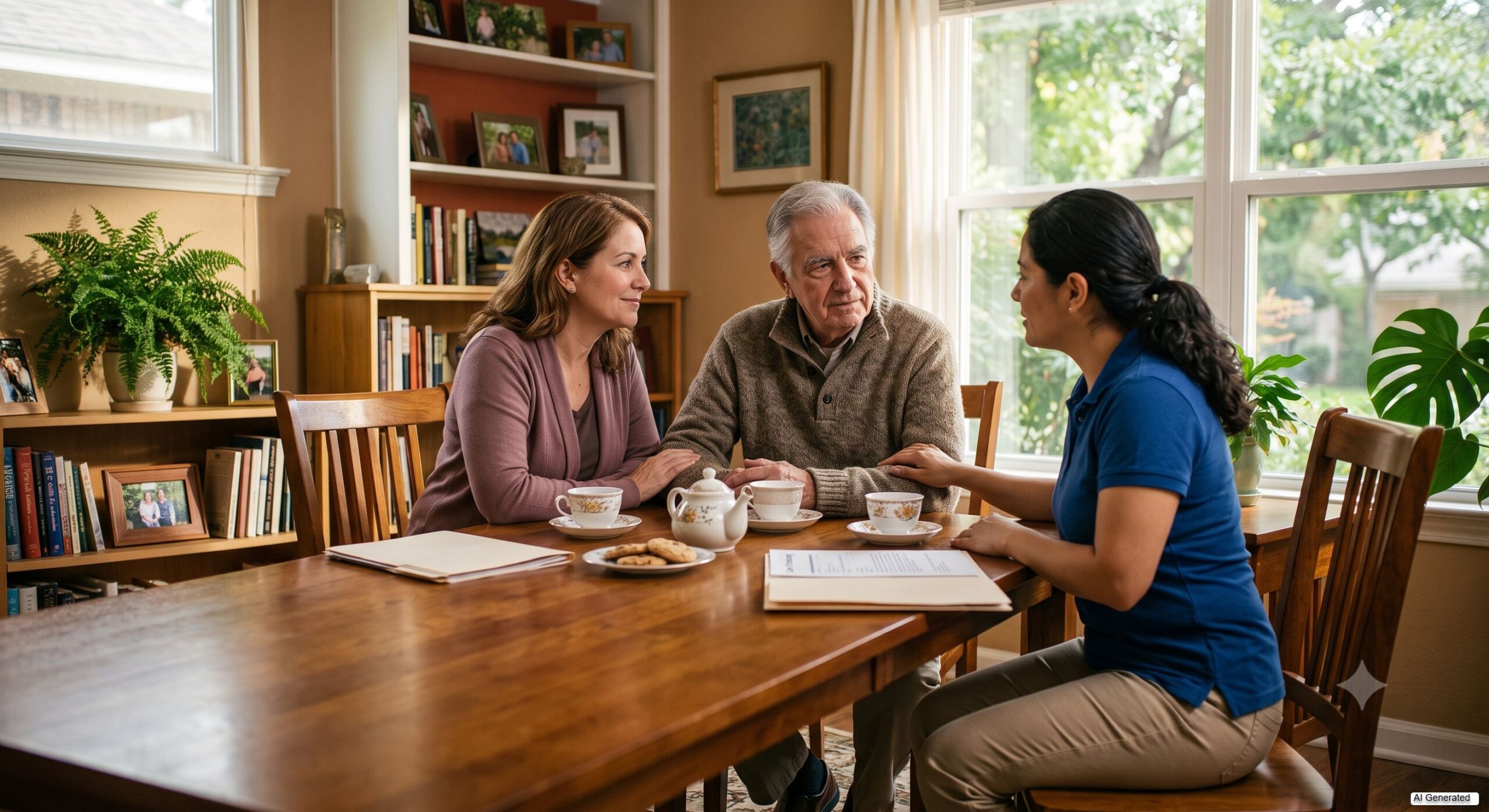
Bringing this up is rarely easy. It helps to lead with something specific you noticed, rather than a general statement about needing help. “I saw the stairs seemed harder for you this weekend, can we talk about some options together” tends to land better than “you can’t live alone anymore.” Involving your parent in the decision, rather than presenting it as already settled, makes a real difference in how it’s received.
What Families Say
| “Shandrece visited us today, answered all our questions and concerns. We will be asking for more services at some point, due to some health issues. Shandrece explained what you could do for us and put our minds to rest.” — Shirley D., via Google Reviews |
If you’re noticing a few of these signs in a parent near, a free in-home visit is a low-pressure way to get an honest assessment, no obligation, just a clear picture of what support would actually help. Call ComForCare North Austin at (512) 957-0006 to get started.
What are the first signs a senior needs home care?
Common early signs include an under-stocked kitchen, unopened mail, changes in hygiene, new bruises, withdrawal from social activities, and repeating questions or getting confused in familiar places.
How do I bring up home care with a parent who resists help?
Lead with a specific, recent observation rather than a general statement, and involve your parent in the decision. Starting with a small amount of support, like a few hours of companionship, is often easier to accept than a big change all at once.
Is memory loss always a sign of dementia?
Not necessarily. Occasional forgetfulness can be a normal part of aging, but repeated questions, getting lost in familiar places, or a noticeable change in judgment are worth discussing with a doctor.
How much home care does a parent typically need at first?
Many families start with just a few hours a week and adjust as needs change. A free in-home visit helps determine the right starting point for your specific situation.

Each office is independently owned and operated and is an equal opportunity employer.

© 2026 ComForCare Franchise Systems, LLC.