
Get Started!

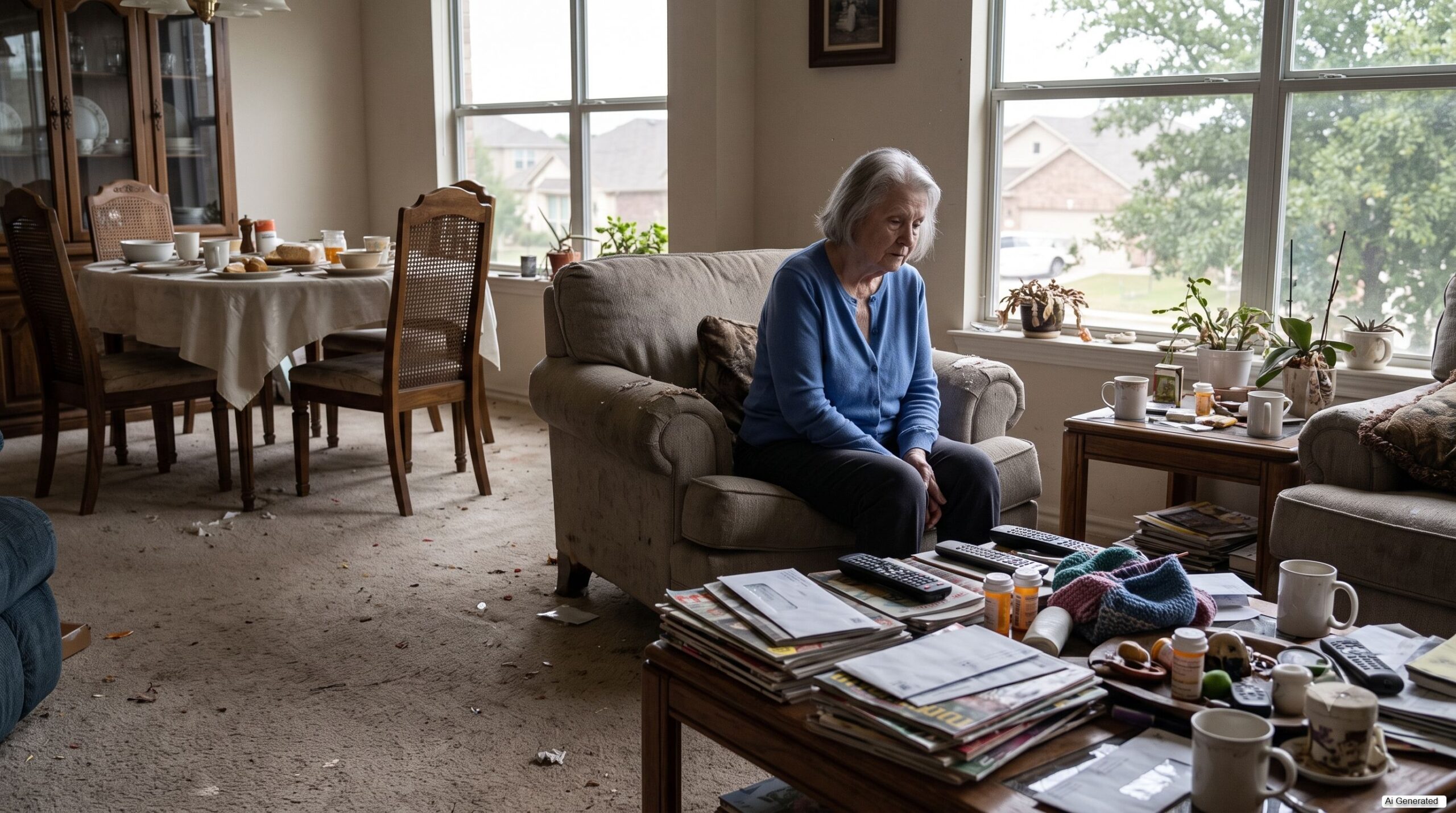
When you visit Mom or Dad in Cedar Park, the house often tells you more than they will. Most parents don’t want to admit they’re struggling, they don’t want to worry you or lose their independence. So the first signs that an elderly parent needs help usually show up in the home itself. Here are five signs to watch for on your next visit, and simple ways to help.
A sink full of dishes, piles of laundry, or clutter building up in the rooms can be one of the earliest signs an elderly parent needs help. If your normally tidy parent is letting things slide, it often means daily chores have become too much, physically or mentally.
How to help: Step in with the heavy chores before they pile up. Regular light housekeeping services in Cedar Park, dishes, laundry, and tidying, keep the home clean and lift a real weight off your parent.
Look down as you walk through the house. Loose rugs, cords across walkways, clutter on the stairs, burned-out bulbs, and no grab bars in the bathroom are all red flags. Falls are the leading cause of injury for older adults, and a cluttered home makes them far more likely.
How to help: Clear the walkways, add brighter lighting, and put grab bars in the bathroom. For a deeper look, our Gaitway® fall prevention program focuses on safe movement and senior fall prevention at home.
Open the refrigerator. Expired food, very little fresh food, or a pile of takeout containers can mean your parent is skipping meals or finding cooking too hard. Unexplained weight loss is a serious warning sign that goes with this.
How to help: Make sure good meals are within reach. A caregiver providing in-home care in Cedar Park can plan menus, shop for groceries, cook healthy meals, and keep an eye on whether your parent is actually eating and drinking.
A growing stack of unopened mail, unpaid bills, or notices can signal that your parent is overwhelmed. Even more concerning are pill bottles that are still full, all mixed up, or past their dates, a sign they’re missing or doubling up on medications.
How to help: Set up a simple system for mail and bills, and bring in support for medications. A caregiver can give medication reminders so the right pill is taken at the right time, and our elder care management team can help coordinate the bigger picture.
An overgrown yard, small repairs left undone, or a parent who looks more unkempt than usual, wearing the same clothes, skipping showers, or letting grooming go, all point to the same thing: keeping up has become too much to manage alone.
How to help: This is where steady, respectful help for elderly living at home makes the biggest difference. Personal care supports bathing, dressing, and grooming with dignity, while a caregiver helps keep the household running.
Expert insight from Dr. Akanksha Bist, PT, DPT, Owner of ComForCare North Austin: “Many families wait for a major event—such as a fall or a hospitalization—before seeking help for an aging loved one. In reality, the home often provides warning signs long before a crisis occurs. As a physical therapist, I pay attention to subtle indicators: increasing clutter, an empty refrigerator, unopened mail, or pill bottles that remain full. These small changes can reveal declining mobility, nutrition, or medication adherence. Recognizing and addressing these signs early is one of the most effective ways to help older adults remain safe, healthy, and independent in their own homes.”
| Area | Warning Sign | Simple First Step |
|---|---|---|
| Home | Clutter, dishes, laundry piling up | Schedule regular light housekeeping |
| Safety | Loose rugs, poor lighting, no grab bars | Clear hazards, add lighting and grab bars |
| Food | Expired food, weight loss, skipped meals | Add meal prep and grocery help |
| Medicine | Full or mixed-up pill bottles | Set up medication reminders |
| Upkeep | Unkempt look, undone chores | Bring in personal care and household help |
The good news is that one or two of these signs rarely means it’s time to leave home. More often, it just means a little help would go a long way. Quality home care assistance in Cedar Park lets your parent stay in the home they love while staying safe, fed, and cared for. ComForCare North Austin provides senior care across Cedar Park, led by a Doctor of Physical Therapy, so safety and independence come first.
For more on helping a loved one stay safe at home, the National Institute on Aging offers a helpful government guide to aging in place.
If you noticed even one or two of these signs on your last visit, trust your gut. A little help now can prevent a fall, a hospital stay, or a harder decision later. Call ComForCare North Austin at (512) 957-0006 or schedule a free in-home assessment, and we’ll help your parent stay safe and independent in Cedar Park.
How do I know if my parent needs help at home?
Watch the home: clutter, spoiled food, unpaid bills, full pill bottles, trip hazards, and slipping personal grooming are all common signs an elderly parent needs help.
What’s the difference between needing help and needing assisted living?
Many seniors who seem ‘almost ready’ for a facility do just fine at home with a caregiver and a few safety changes. Home care is often the gentler, more affordable first step.
Can a caregiver just do light housekeeping?
Yes. You can start with light housekeeping and meals, then add personal care or more hours later if needs grow.
How do I bring up the conversation with my parent?
Lead with care, not control. Focus on keeping them safe and independent at home, and frame help as a way to make daily life easier not as taking over.
How quickly can care start in Cedar Park?
Often within 24 to 48 hours of a first in-home visit, and faster for urgent needs.

Each office is independently owned and operated and is an equal opportunity employer.

© 2026 ComForCare Franchise Systems, LLC.