
Get Started!

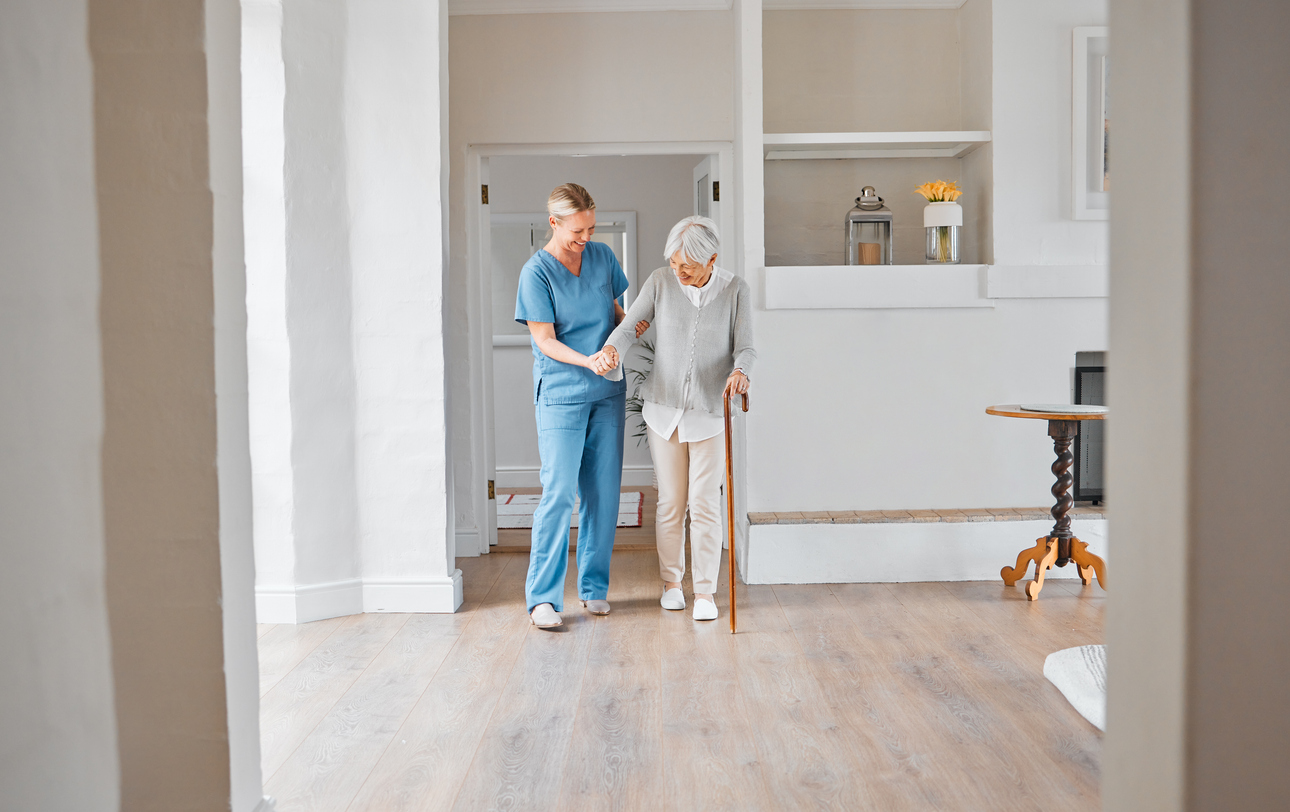
TL;DR: Parkinson’s disease raises fall risk three to five times above the average for older adults. About 80% of those falls trace back to two causes: postural instability and freezing of gait. Most falls happen at home, and many are preventable. ComForCare’s Gaitway program offers families in New Braunfels a structured, CDC-sourced approach to reducing fall risk before a fall changes everything.
Picture your parent crossing the living room and then stopping. Not by choice. Their feet lock to the floor mid-step, and for a few seconds they can’t move. Their balance is shifting. If they’re alone, the next few seconds determine whether they stay upright or hit the ground.
That’s freezing of gait. For families caring for someone with Parkinson’s, fall prevention isn’t a box to check. It’s one of the most important things you can do to protect their independence.
Falls are already the leading cause of injury-related death among adults 65 and older. The fall death rate increased 21% between 2018 and 2024. For someone with Parkinson’s, that risk becomes significantly more acute.
Research found that people with Parkinson’s experience a fall risk three to five times higher than age-matched controls. Parkinson’s disrupts the brain’s ability to manage movement automatically, affecting balance, gait, and the body’s ability to recover when it starts to tip.
Postural instability means the body leans or sways without being able to self-correct. The automatic responses that keep a healthy person upright during a stumble are slower and weaker in Parkinson’s, so a small shift in weight that most people would never notice can become a fall.
Freezing of gait is the temporary, involuntary inability to move the feet forward while the upper body keeps shifting momentum. It typically hits at doorways, turns, or direction changes. The feet stop, the body doesn’t, and recovery is very difficult. According to the Parkinson’s Foundation, about 80% of falls in Parkinson’s result from postural instability and freezing combined. Fear of the next fall often leads to less movement, which weakens muscles and raises risk further. Breaking that cycle takes the right support.

The National Safety Council reports that more than half of all fall injuries happen inside the home. For someone with Parkinson’s, the home often contains hazards invisible to everyone but the person moving through them with an unpredictable gait.
The most common ones to address:
Most of these fixes take an afternoon and cost very little. But they require someone to walk through the home with trained eyes.

ComForCare’s Gaitway fall prevention program starts with a fall risk screening sourced directly from the CDC. A trained professional then conducts a home safety evaluation, identifying specific hazards including loose rugs, lighting gaps, and bathroom risks. The program partners with a practicing physical therapist who specializes in fall-prevention exercises.
Gaitway coordinates with the client, their caregiver, and their healthcare provider to build a plan that fits the specific situation. Caregivers receive education on how to assist safely, what warning signs to watch for, and how to support movement throughout the day.
The most effective approach combines home safety modifications, balance-focused exercise, medication management, and a trained caregiver presence during higher-risk activities like bathing, transferring, and moving up or down stairs. Physical therapy using rhythmic auditory cueing, a technique that uses a beat to prompt regular steps, has shown real benefit for managing freezing episodes.
For families in New Braunfels, Seguin, and San Marcos, ComForCare also offers Parkinson’s Pathway, a specialized care program for Parkinson’s clients. Co-owner Chad Otte has also been building a local relationship with the Lone Star Parkinson’s Society, which runs support groups and fitness programs twice monthly in New Braunfels.
Every caregiver passes the DEAR assessment, a screen for drugs, ethics, attitude, and reliability that fewer than 2% of applicants clear. The average tenure at ComForCare New Braunfels is more than 10 years. A caregiver who has supported dozens of Parkinson’s clients learns to recognize warning signs before a freeze happens.
No program eliminates risk entirely, but structured intervention identifies the specific factors driving someone’s fall risk and reduces them. Medication adjustments, home modifications, balance training, and caregiver support all meaningfully lower fall frequency. The goal is to reduce the chances that the next freeze will cause a serious injury.
Before the first fall is always the right answer, but that’s rarely when families call. The clearest signals include a recent fall or near-miss, visible freezing during daily movement, a Parkinson’s diagnosis at any stage, or a loved one expressing fear about getting around their home.
Yes. A trained caregiver provides physical support during higher-risk activities, consistent observation of changes in gait and balance, and routine, which is one of the most underappreciated fall prevention tools for someone with Parkinson’s.
A serious fall can mean surgery, hospitalization, and a long road back. For someone with Parkinson’s, it can also mean a sharp acceleration of decline. The good news is that most of the risk factors are addressable, and starting early gives families the most options.
At ComForCare New Braunfels, we work with families across New Braunfels, Seguin, San Marcos, Universal City, and Canyon Lake to build fall prevention plans that fit real lives and real homes.
Call us at (830) 632-5887 or visit our website to schedule a free in-home consultation and learn more about the Gaitway program. A trained team member will walk through your loved one’s home, assess their specific risks, and help you build a plan before a fall makes the decision for you.

Each office is independently owned and operated and is an equal opportunity employer.
© 2026 ComForCare Franchise Systems, LLC.