
Get Started!


May is Stroke Awareness Month, and if someone you love has recently had a stroke, you’re probably already aware. The first few days are a blur of medical decisions and discharge paperwork. Then your loved one comes home, and a whole new chapter begins.
Stroke recovery at home is hard. But it’s possible to do it well with the right support. For families in New Braunfels, San Marcos, and surrounding communities, understanding what that recovery really looks like makes a meaningful difference in how well it goes.
A stroke occurs when blood flow to part of the brain is cut off by a clot or a bleed, and brain cells in that area begin to die quickly without oxygen. The damage left behind drives the wide range of effects survivors experience: weakness on one side, speech difficulties, memory changes, trouble swallowing, and more.
What’s less understood is the brain’s capacity to recover. Neuroplasticity, the brain’s ability to form new neural connections, kicks in almost immediately. Healthy areas of the brain can gradually take over functions that were lost, which is why consistent practice and support matter so much in the weeks and months that follow.
The first three months tend to bring the most noticeable gains, when the brain is most active in its healing process. This is often called the “golden window.” But meaningful progress can continue well beyond six months, and even years later, especially with ongoing effort and the right support.
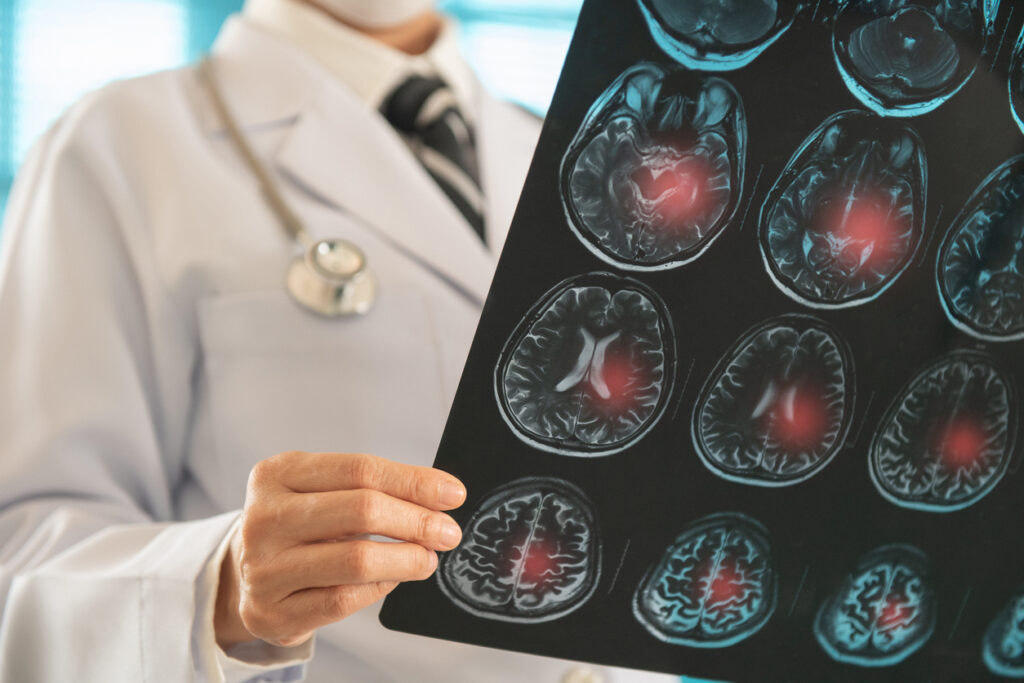
The hospital stay after a stroke is typically five to seven days. That’s not much time to prepare for everything that comes next. Here are the challenges families most commonly face:
Mobility and fall risk. Weakness and balance problems make falls a big concern. Small home modifications like grab bars, non-slip mats, and cleared pathways make a significant difference early on.
Help with daily tasks. Bathing, dressing, and preparing meals can become difficult after a stroke. Most survivors need some support with activities of daily living (ADLs), at least in the early weeks.
Cognitive changes. More than half of stroke survivors experience some degree of cognitive impairment, including memory gaps, difficulty concentrating, trouble finding words, or slower processing. It can be disorienting for the whole family.
Emotional and mental health. Up to half of stroke survivors experience depression at some point during recovery, according to the American Heart Association. Anxiety and mood swings are also common. These are neurological and emotional responses to a major brain injury, and they deserve attention.
Roughly 20% of Medicare patients discharged after a stroke are readmitted within 30 days. That’s one of the most vulnerable stretches of the entire recovery process, which is why ComForCare’s Reducing Hospital Readmissions program was built with exactly this transition in mind.
Stroke rehabilitation is built around one core principle: repetition. The brain relearns through consistent, targeted practice, doing the same movements over and over until they start to come back.
For physical stroke recovery exercises at home, consistency matters more than intensity. Aim for about an hour of movement daily, broken into shorter sessions if needed. Range-of-motion exercises, gentle strength work, balance practice, and short walks all contribute meaningfully to recovery.
Always coordinate home exercises with your loved one’s therapy team, since the right approach depends on how and where the stroke affected the brain.
Cognitive recovery is just as trainable as physical recovery. Brain exercises for stroke recovery stimulate neuroplasticity and encourage the brain to build and strengthen new pathways.
The best options are ones that challenge without overwhelming: card matching, jigsaw puzzles, word games, cooking from a recipe, reading aloud, retelling what was read, and music. Consistent practice matters more than the specific activity. If your loved one enjoys it, that’s already working in their favor.
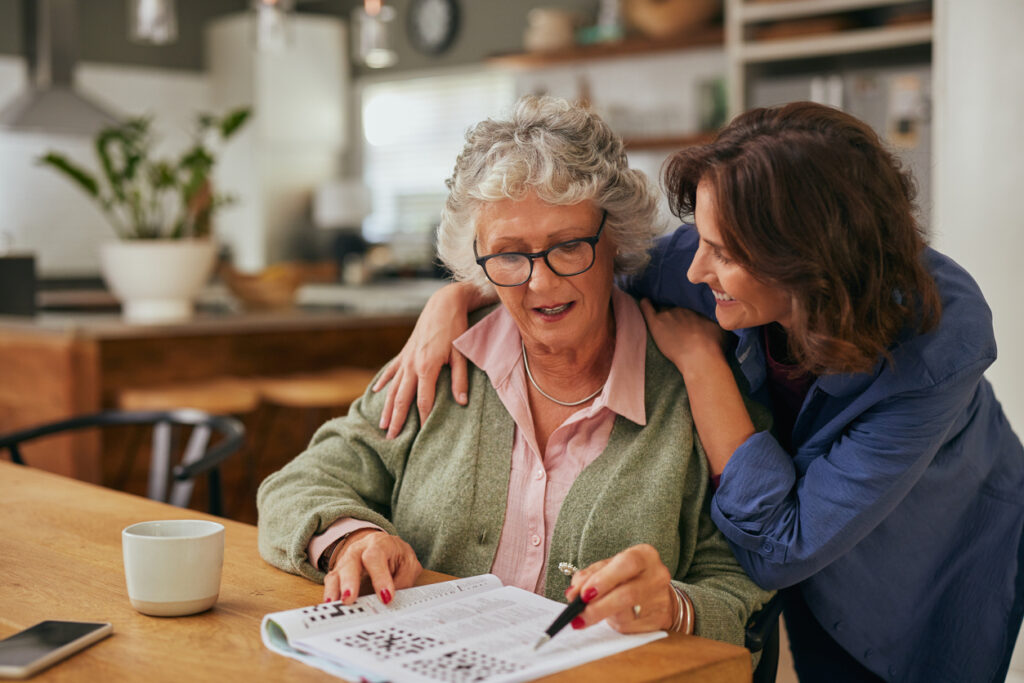
Depression after a stroke can look like withdrawal, loss of motivation, irritability, or emotional flatness. The American Heart Association notes it’s been linked to worse recovery outcomes overall, which makes emotional health a medical priority, not an afterthought.
Many family caregivers of stroke survivors experience depression during the recovery period. That’s a clear argument for respite care, not as a luxury, but as a necessity. You can’t keep helping if you’re running on empty.
If you’re a family caregiver, ComForCare’s respite and short-term care services are designed for exactly this.
Recovering from a stroke isn’t something families have to navigate alone, and the New Braunfels area has some real resources worth knowing about.
CHRISTUS Santa Rosa Hospital offers stroke rehabilitation and access to interventional neurology, making it a primary local option for families managing post-stroke care. Their team provides stroke rehabilitation and consults with an interventional neurologist at their New Braunfels location on North Union Avenue.
San Marcos HOPE for Stroke and Brain Injury Survivors is a support group specifically designed for stroke survivors and their families. It meets on the 2nd and 4th Mondays from 1 to 2:30 pm at the CHRISTUS Santa Rosa Professional Building in San Marcos, at 1301 Wonder World Drive. You can reach them at 512-753-3818.
If you’re not sure where to start, call ComForCare of New Braunfels. Helping families find the right resources, in and out of the home, is part of what we do.
In-home care fills the gap between therapy appointments, covering the other hours of the day when recovery continues. A trained caregiver can assist with daily routines, encourage prescribed exercises, provide companionship, and watch for early warning signs that something’s changing.
At ComForCare New Braunfels, families get caregivers who know their loved one, not a rotating roster of unfamiliar faces. Our team is trained to notice changes and communicate clearly with families as recovery progresses.
Yes. While the first three months bring the fastest gains, neuroplasticity remains active well beyond six months. Progress tends to slow, but it doesn’t stop. Many survivors continue making meaningful improvements a year or more after their stroke.
Watch for mobility challenges (like instability or falls), trouble managing medications, signs of depression or withdrawal, difficulty with basic self-care, and caregiver fatigue. Any of these can signal that adding in-home care would make a real difference in both safety and recovery.
Not at all. Care can be scheduled around what your family needs, whether that’s a few hours a day, a few days a week, or around the clock. There’s no weekly minimum, just a four-hour shift minimum per visit.
Stroke recovery isn’t a straight line. There are good days and hard ones, stretches of real progress and stretches that plateau. What makes the difference is consistent support, someone showing up day after day to help with the work.
If your loved one is recovering from a stroke at home, we want to learn more about their situation and talk through what support might look like.
Call us at 1-830-632-5887 or visit our website to schedule a free in-home consultation.

Each office is independently owned and operated and is an equal opportunity employer.
© 2026 ComForCare Franchise Systems, LLC.